For visiting universities & studios
海外の大学・スタジオの皆さまへ
A page for universities and studios outside Japan who want to bring students to Sagishima. Every year we host students and professors from the University of Tokyo and Hiroshima University, who come to perform research, advance their studio brief, and collaborate with us. We would like to host yours too.
学生を佐木島に連れてきたいと願う、日本国外の大学・スタジオのためのページです。私たちは毎年、東京大学と広島大学の学生・教員を迎えています。彼らは研究を行い、スタジオ課題を進め、私たちと協働するために佐木島へ来ます。あなたの大学も、ぜひお迎えしたいと思っています。
We are a working design school on a depopulating island in the Seto Inland Sea. What we offer a visiting university is not a tour and not a venue rental. It is access to an active institution and a living community: a curated studio embedded in real salvage-and-reconstruction work, in a place where the relationships that make the work possible are decades, sometimes centuries, old.
私たちは、瀬戸内海の過疎が進む島にある、現に稼働している設計学校です。訪れる大学に提供するのは、見学ツアーでも会場の貸し出しでもありません。生きて動いている機関と、生きた共同体へのアクセスです。すなわち、本物の救出(サルベージ)と再構築の仕事のただ中に組み込まれた、ひとつのスタジオ。その仕事を可能にしている関係が、数十年、ときに数百年の歳月を重ねてきた場所での。
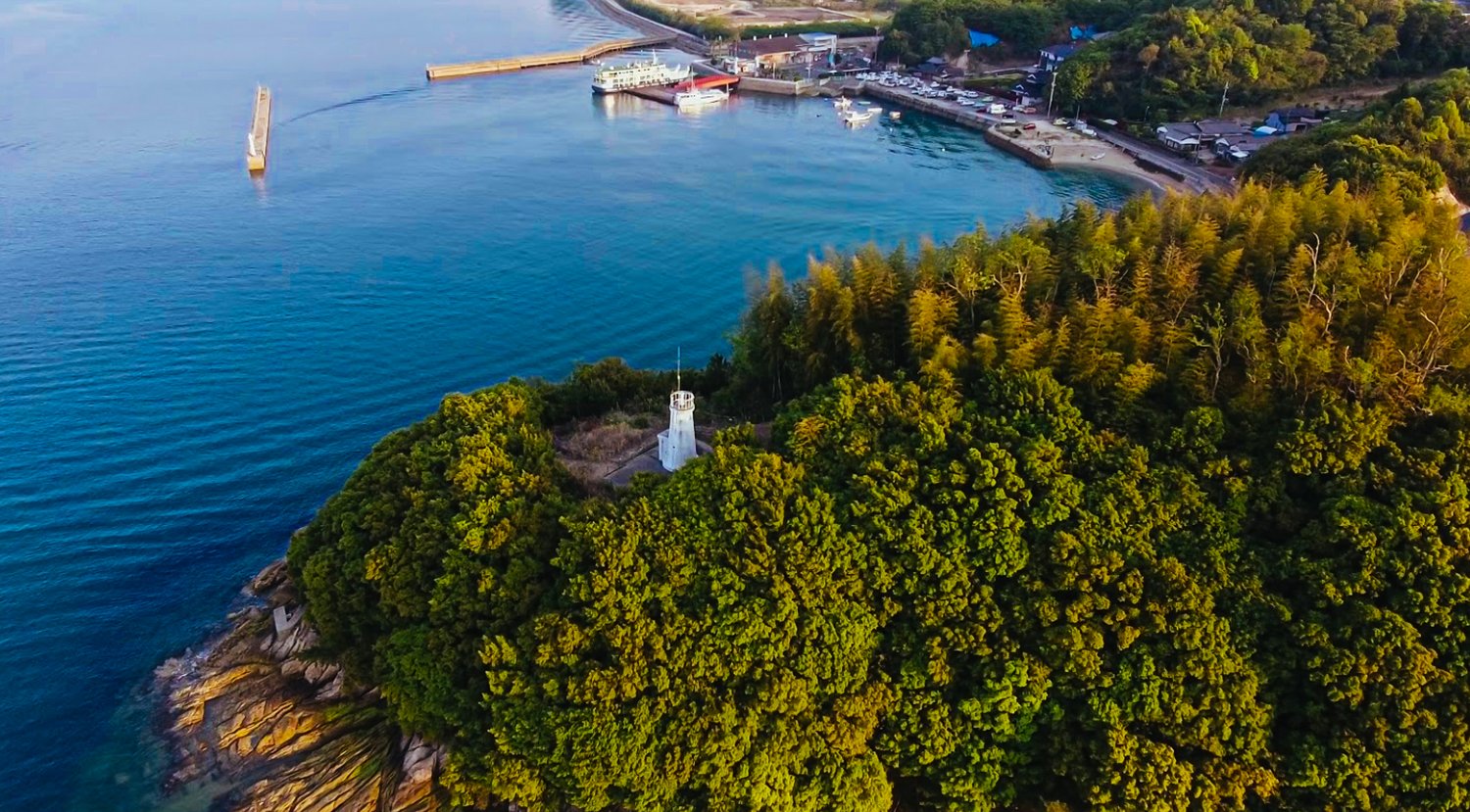
Fig. 01Sagishima from the air, with Sagiura harbor and the headland observation tower.
図 01上空からの佐木島。鷺浦港と岬の展望塔。
What the fee covers
費用に含まれるもの
We price a visit in two parts: a per-student fee that covers the things we set up once for your group, and a daily rate that covers the cost of each student being here, fed, housed, and working, each day.
訪問の費用は二つに分けて設定します。グループのために一度だけ整える事柄をまかなう「学生一人あたりの費用」と、各学生がここで日々過ごし、食べ、泊まり、働くための費用をまかなう「一日あたりの料金」です。
Per-student fee
学生一人あたりの費用
A dedicated, curated studio brief built with your faculty: we integrate your curriculum, pedagogy, and learning outcomes into the visit rather than running a fixed package.
教員の皆さまと共につくる、専用のスタジオ課題。既製のパッケージを当てはめるのではなく、貴校のカリキュラム、教育方針、学習目標を訪問に組み込みます。
Coordination and a faculty liaison before and during the visit: scheduling, logistics, a point of contact, and translation and interpretation between your group and the island.
訪問の前と最中の調整と、教員担当の窓口。日程、段取り、連絡の窓口、そしてグループと島とのあいだの翻訳・通訳。
Procurement of specific tools and materials your project needs, sourced for the brief.
プロジェクトに必要な特定の道具や資材の調達。課題のために手配します。
Access to sites on and off the island, arranged through our standing relationships: salvage sites, akiya (空き家, vacant houses) we are working on, civic buildings, the Sunoue gymnasium workshop, and partner sites in Onomichi and Mihara that we can open because the islanders and the city know us.
島の内外の現場へのアクセス。私たちが築いてきた関係を通じて手配します。救出の現場、私たちが手がける空き家、公共の建物、須ノ上体育館の工房、そして島民と市が私たちを知っているからこそ開ける、尾道・三原の協力先。
Onboarding into our digital infrastructure: the project Discord, our shared documentation, and our SagiWiki and FoundationWiki knowledge bases.
私たちのデジタル基盤への参加。プロジェクトの Discord、共有ドキュメント、そして SagiWiki・FoundationWiki の知識ベース。
Photo and video documentation of your students' work, which you keep.
学生の仕事の写真・映像での記録。それは貴校のものとなります。
Access to our reclaimed-material stock held in the gymnasium, as a design resource.
体育館に保管された再生材のストックへのアクセス。設計の資源として。
Daily rate
一日あたりの料金
Housing in our donated and restored island buildings.
寄贈され、修復された島の建物での宿泊。
Two cooked meals a day (breakfast and dinner), taken together outside between the teacher houses, plus a packed bento for lunch in the field.
一日二度の温かい食事(朝食と夕食)。教員の家々のあいだの屋外で、みなで一緒に。加えて、現場での昼食には弁当を。
Studio and workshop space: the Sunoue gymnasium as salvage warehouse, workshop, and gallery; tools and equipment; the gathering and meal spaces.
スタジオと作業の場。倉庫・工房・展示室をかねる須ノ上体育館、道具と設備、集いと食事の場。
Local transport on and around the island for the day's work.
その日の仕事のための、島内および周辺の移動手段。
Daily facilitation and instruction: our faculty working alongside your students, plus the standing rhythms of island life we fold visitors into (morning radio taiso, shared dinners).
日々の進行と指導。私たちの教員が学生とともに働き、訪れる人を迎え入れる島の暮らしの習わし(朝のラジオ体操、みなで囲む夕食)も含めて。
Consumable materials and supplies used up in the day's making.
その日のものづくりで使い切る、消耗品と材料。
How we curate a visit
訪問をどうしつらえるか
We work with studio professors and university administrators to integrate their curriculum and pedagogy into the curation of their visit: procuring specific tools and materials, gaining access to sites on and off the island, and satisfying eclectic needs and ambitious ideas.
私たちは、スタジオの教員や大学の事務の方々と協働し、そのカリキュラムと教育方針を訪問のしつらえに組み込みます。特定の道具や資材を調達し、島の内外の現場へのアクセスを得て、多種多様な要望や野心的な構想に応えます。
In practice that means: before you arrive we build the brief with you; while you are here we open doors that took us years to open; and the whole time, your students are doing real work inside a real institution, not visiting one.
具体的には、こういうことです。到着の前に、課題を共につくる。滞在のあいだは、私たちが何年もかけて開いてきた扉を開く。そしてそのあいだずっと、学生は本物の機関を訪れるのではなく、その内側で本物の仕事をしているのです。
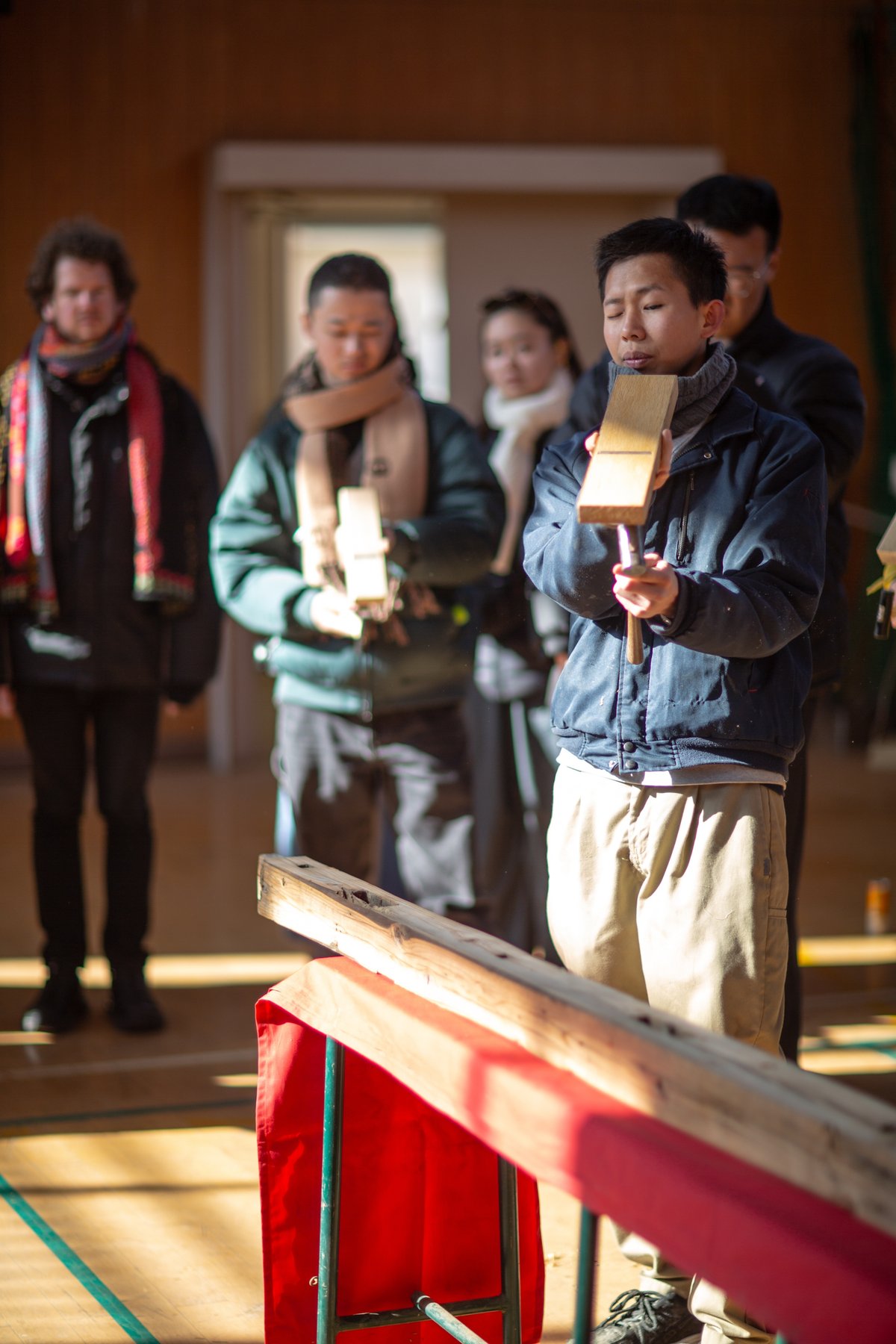
Fig. 02Mr. Shikata's planing workshop at the Sunoue gymnasium, January 2024, with visiting students working salvaged timber.
図 02須ノ上体育館での仕方棟梁のかんな掛けワークショップ。2024年1月、訪問学生が救出材を削る。
The invisible infrastructure
見えないインフラ
Much of what makes a Sagishima studio possible is not bought. It is given. The island runs an old, living mutual-aid economy, and when we arrived the islanders folded us into it. We do not take this for granted, and we do not want to: a visiting student should understand that the school works because the island carries it.
佐木島でのスタジオを成り立たせているものの多くは、買ったものではありません。与えられたものです。この島には、古くから生きている相互扶助の経済があり、私たちが来たとき、島民はそこに私たちを迎え入れてくれました。私たちはそれを当然とは思いませんし、思いたくもありません。訪れる学生には、この学校が成り立つのは島がそれを支えているからだ、と分かってほしいのです。
Cars, lent to us when we need to move people or material, so we have never had to buy a schoolbus the islanders know we cannot afford.
車。人や資材を運ぶ必要があるとき貸してくれる。おかげで、自分たちには買えないと島民も知っているスクールバスを、ついに買わずにすんでいる。
Hands when we get stuck: help fixing things, moving things, solving the day's problem.
行き詰まったときの手。直し、運び、その日の問題を解くのを助けてくれる。
Grandmother-sweets: island elders cooking for and welcoming the cohort, like the batch of kashiwa-mochi the grandmothers brought to our June 2026 studio at the schoolhouse and read us a letter over.
おばあちゃんのお菓子。島の年長者が一行のために料理し、迎えてくれる。たとえば、2026年6月の校舎でのスタジオに、おばあちゃんたちが手紙を読み上げながら持ってきてくれた柏餅のように。
Food from the fields and the sea: unsellable vegetables given free to families, a good catch turned into sashimi and shared at our outdoor dinner, watermelons, salt-making shown to us.
畑と海からの食べ物。売り物にならない野菜が家族に無償で分けられ、よい釣果が刺身になって屋外の夕食でふるまわれ、すいかが配られ、塩づくりを見せてもらう。
Knowledge and access: islanders showing us hokora, telling us histories, vouching for us so the city and neighbors open sites to us.
知識とつながり。島民が祠(ほこら)を見せ、歴史を語り、私たちの身元を保証してくれることで、市や近隣が現場を開いてくれる。
The daily rhythm itself: radio taiso, beach-cleaning, that we are invited into rather than charged for.
日々のリズムそのもの。ラジオ体操や浜の掃除に、料金ではなく招きとして加えてもらう。
If we are doing things right, our internal mutual-aid system should resemble the mutual-aid systems already operating here before we arrived. The elders of this island have practiced mutual aid longer than any of us have been alive, and understanding how they do it is part of what a studio here gets to study.
うまくやれているなら、私たちの内なる相互扶助の仕組みは、私たちが来る前からここで動いていた相互扶助の仕組みに似てくるはずです。この島の年長者たちは、私たちの誰よりも長く相互扶助を実践してきました。彼らがどうやっているのかを理解することも、ここでのスタジオが学べることの一部なのです。
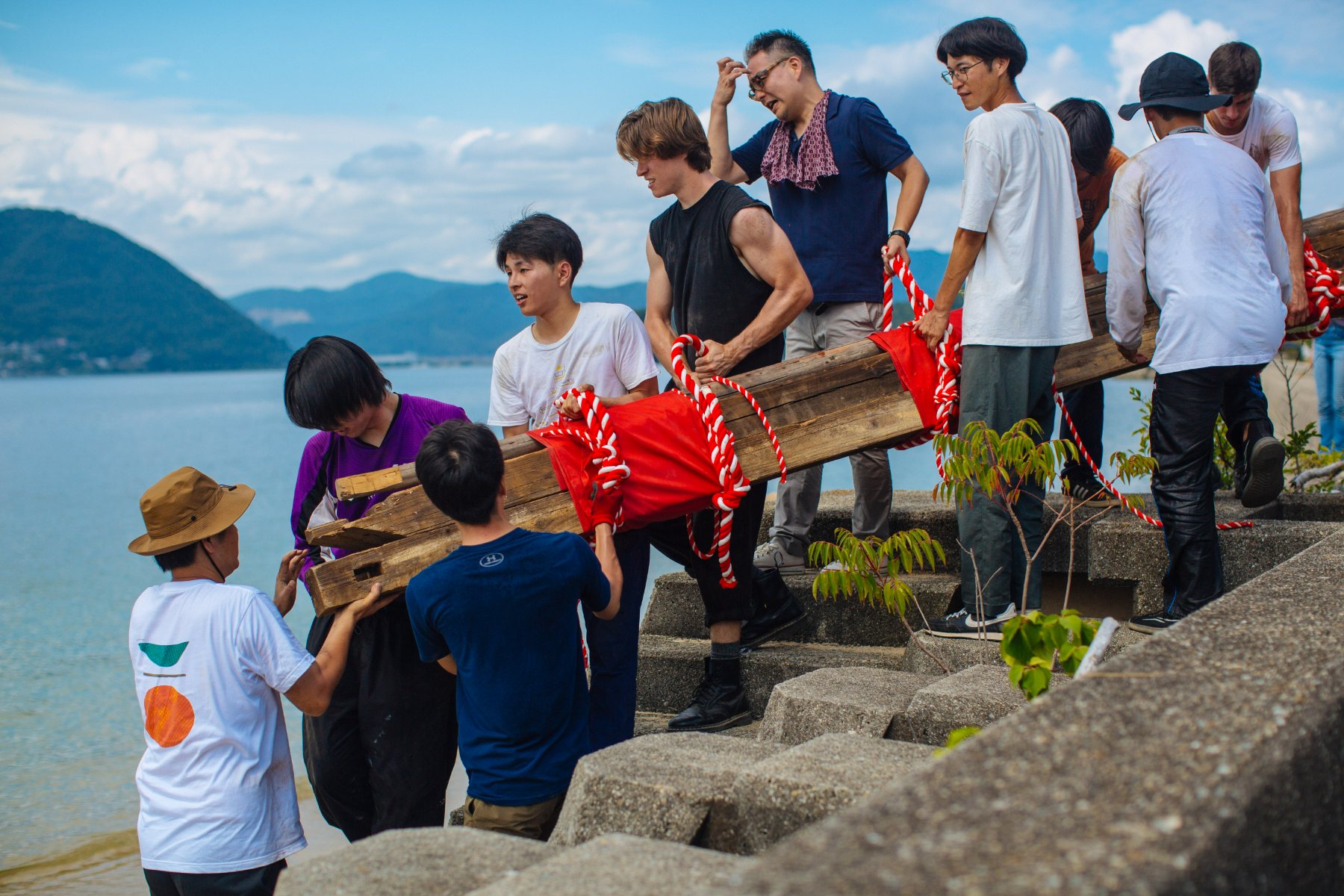
Fig. 03Students, faculty, and islanders carrying a bundle of salvaged timber up the seawall together. September 2023 studio.
図 03学生、教員、島民が共に救出材の束を防潮堤へ担ぎ上げる。2023年9月のスタジオ。
To see if we are a good fit
相性を確かめるために
To gauge whether our program is a good mutual fit for your students and our faculty, please tell us a little about your group, and then let's set up a call.
私たちのプログラムが、貴校の学生と私たちの教員にとって良い相性かどうかを見極めるため、まずはグループについて少しお聞かせください。そのうえで、通話の場を設けましょう。
About
私たちについて
Sagishima ・ 佐木島佐木島について
An island of roughly 8.72 km² in the Seto Inland Sea, in Mihara City, Hiroshima Prefecture. Reachable by Shinkansen to Onomichi or Mihara and then a short ferry. It is depopulating and aging: nearly a third of its houses stand vacant. It is also, quietly, one of the most generous places we know, with a mutual-aid culture its elders have kept alive for generations.
広島県三原市、瀬戸内海に浮かぶ、面積およそ8.72km²の島。新幹線で尾道または三原まで来て、短いフェリーで渡れます。過疎と高齢化が進み、家の三分の一近くが空き家です。そしてこの島は、ひそやかに、私たちの知るかぎり最も寛容な場所のひとつでもあります。年長者たちが幾世代にもわたって守ってきた、相互扶助の文化とともに。
Our project私たちの取り組み
The Red Dot School runs residential design studios on Sagishima built around Salvage-as-a-Service: we take vacant houses apart through careful disassembly, recover their material and their memory, and reconstruct from it, documenting what we recover as we go. The work is real (we are restoring island buildings and building a salvage economy), and it is taught (each studio is a curriculum).
レッドドットスクールは、佐木島で滞在型の設計スタジオを運営しています。その中心にあるのは「サルベージ・アズ・ア・サービス」。空き家を丁寧に解体し、その材と記憶を救い出し、そこから再構築する。救い出したものを、その都度記録しながら。この仕事は本物であり(島の建物を修復し、救出の経済を築いています)、かつ教えられています(一つひとつのスタジオが、ひとつのカリキュラムです)。
Our facilities私たちの施設
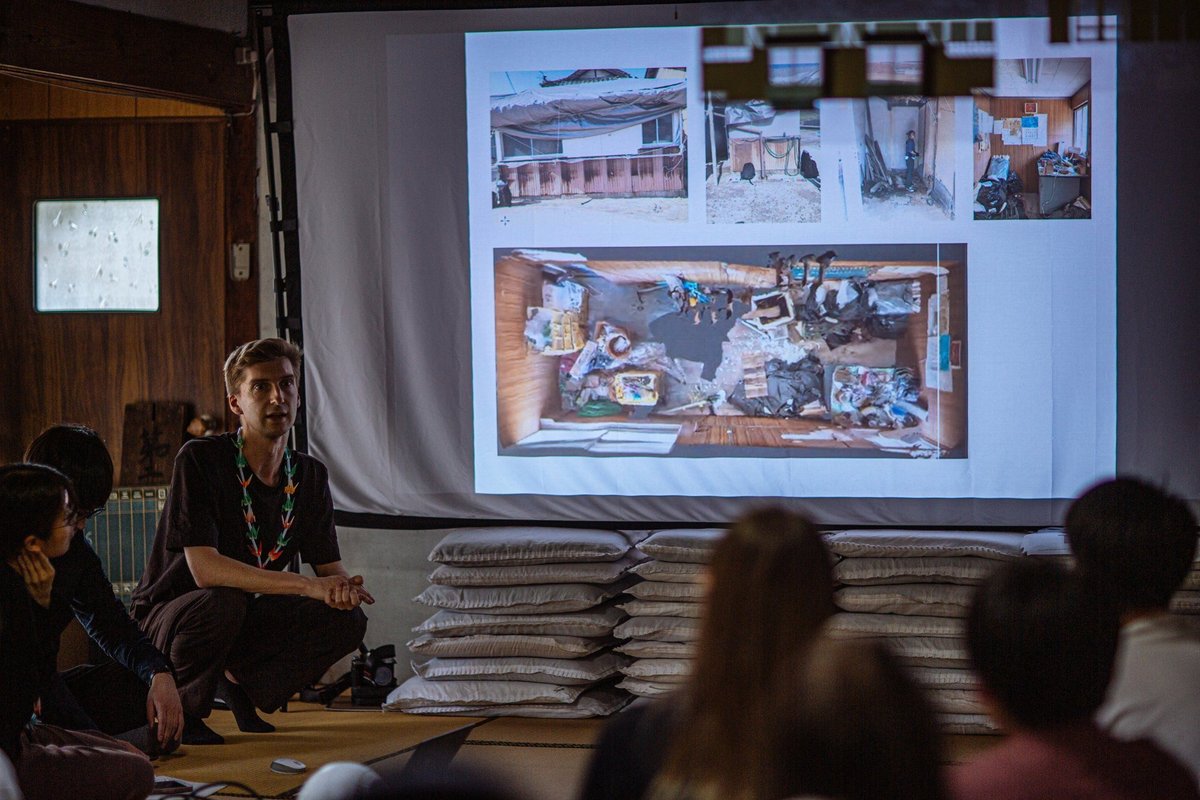
Fig. 04The Kakumeisha schoolhouse in use as a classroom: tatami seating, zabuton stacked at the back, a lecture in progress.
図 04教室として使われる革命社の校舎。畳に座り、座布団は奥に積み、講義が進む。
The schoolhouse, the oldest standing public structure on the island.
校舎。島に現存する最も古い公共の建物。
Student housing in donated and restored island homes.
学生の宿。寄贈され修復された島の家々。
The Sunoue gymnasium, our salvage warehouse, workshop, and gallery; the heart of the making.
須ノ上体育館。救出材の倉庫・工房・展示室であり、ものづくりの心臓部。
Teacher housing, with meals taken outside, together, in the space between the houses.
教員の宿。食事は家々のあいだの屋外で、みなで一緒に。
Tools, equipment, and a growing library of salvaged material.
道具、設備、そして増えつづける救出材のライブラリー。
A standing digital layer: Discord and our SagiWiki and FoundationWiki knowledge bases.
常設のデジタル層。Discord と、SagiWiki・FoundationWiki の知識ベース。
About the future
これからについて
Most of the world looked at a depopulating island and saw a sunset. We chose to read the same red dot as a sunrise. A studio here is a chance to build inside that choice.
世界の多くは、過疎の島を見て、日の入りを見ました。私たちは同じ赤い点を、日の出として読むことを選びました。ここでのスタジオは、その選択の内側で何かを築く機会です。
Our mission. Sagishima is an aging, emptying island, and the easy thing was to manage its decline. We refuse that. The Red Dot School exists to restore the island's capacity to renew itself, in people and in spirit, so that the culture of mutual aid its elders still carry is inherited by a living community rather than archived as the record of one that ended.
私たちの使命。 佐木島は高齢化し、空になりつつある島であり、たやすい道はその衰退を管理することでした。私たちはそれを拒みます。レッドドットスクールは、島が自らを更新する力を、人においても精神においても取り戻すために存在します。年長者たちがいまも担う相互扶助の文化が、終わった共同体の記録として保管されるのではなく、生きた共同体へと受け継がれていくように。
The single test we hold everything to, including a visiting studio, is integration over extraction: does the work deepen the life of this island, or simply run alongside it. We ask that of ourselves first. We will ask it of your studio too, and we will help you meet it. That is what makes a visit here different from a field trip.
私たちがすべてを照らし合わせる唯一の試金石は、訪れるスタジオも含めて、収奪ではなく統合です。その仕事は、この島の暮らしを深めるのか、それともただ並走するだけなのか。私たちはまず自らにそれを問います。あなたのスタジオにも問いますし、それに応えられるよう力を貸します。それが、ここへの訪問を社会科見学とは違うものにしているのです。
東西の日輪点じて島熱る
“East and West kindle the sun-disc, and the island grows fervent.”
Isso ・ 河本義成