佐木島の水路の側壁に現れる規則性と不規則性について考えてみよう。
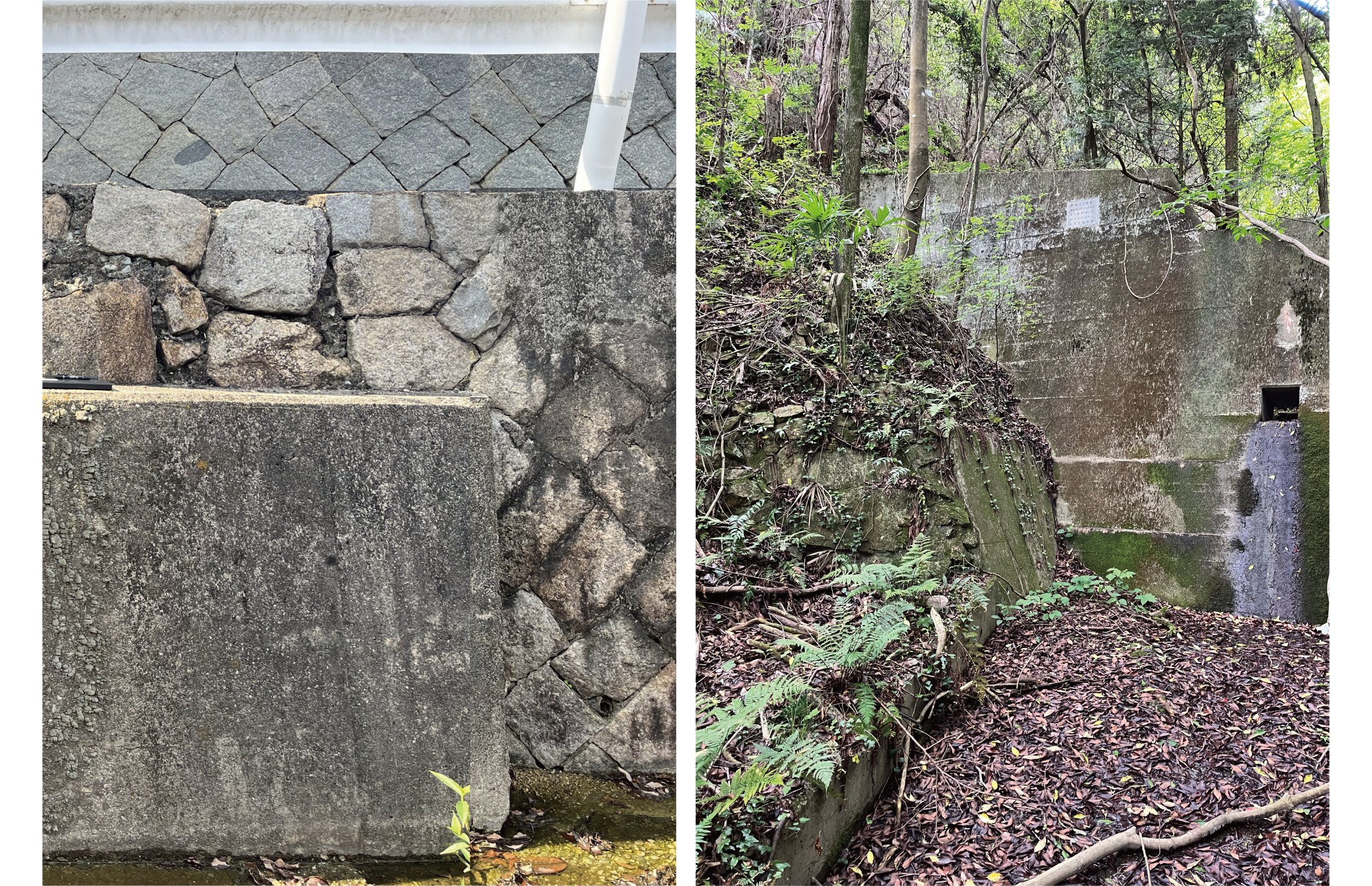
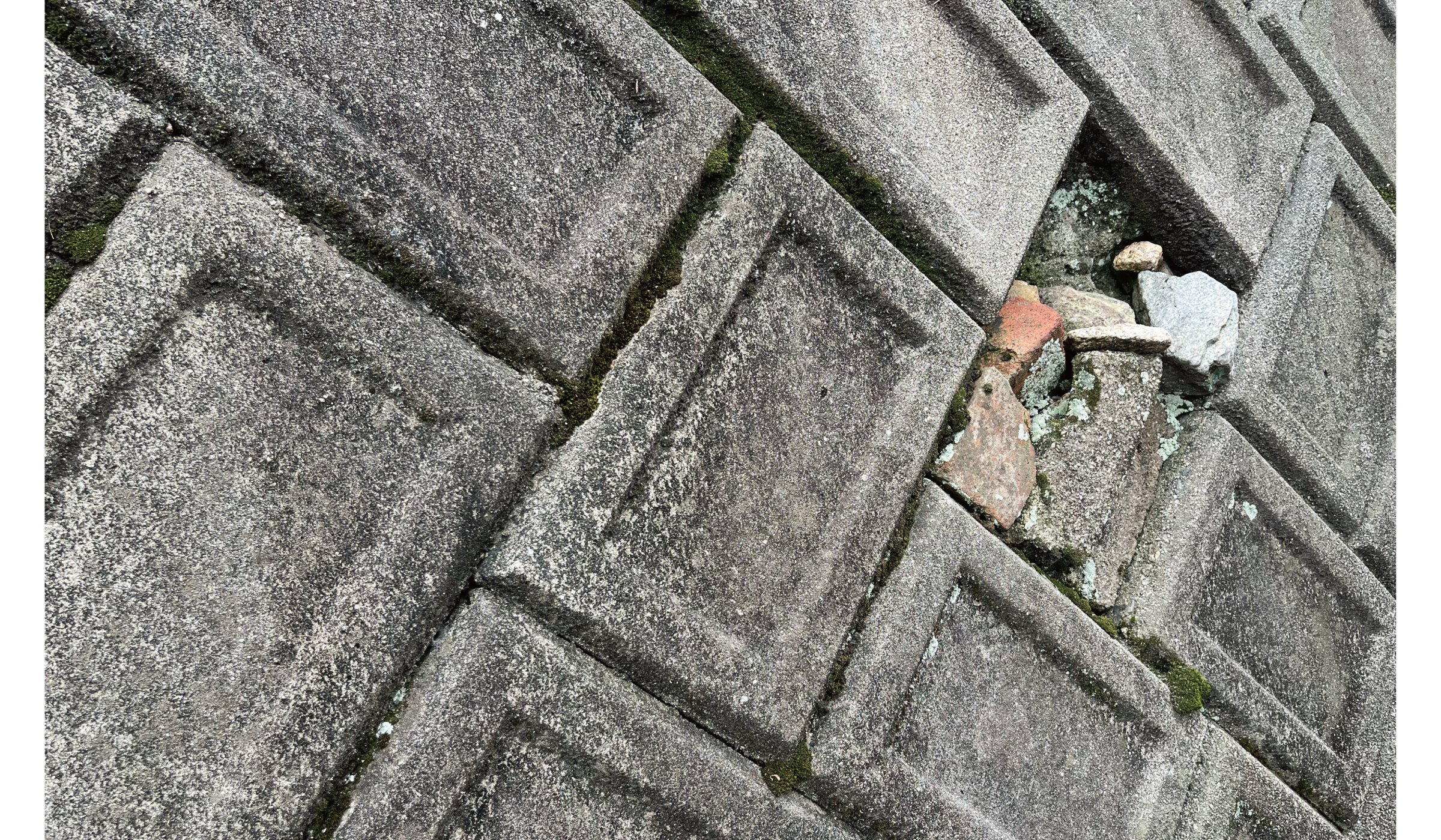
佐木島の水路沿いを歩いていると、パターン、質感、構成の変化に気づくようになる。そこには、「谷積み」と呼ばれる構法によってつくられた規則性とそれを崩す不規則性が同居していることがわかる。長く長く続いていくように思える規則性も、環境の変化によって破られる。島民によって埋められた空隙、平らなコンクリートの面、そこに割り込む植生の塊。
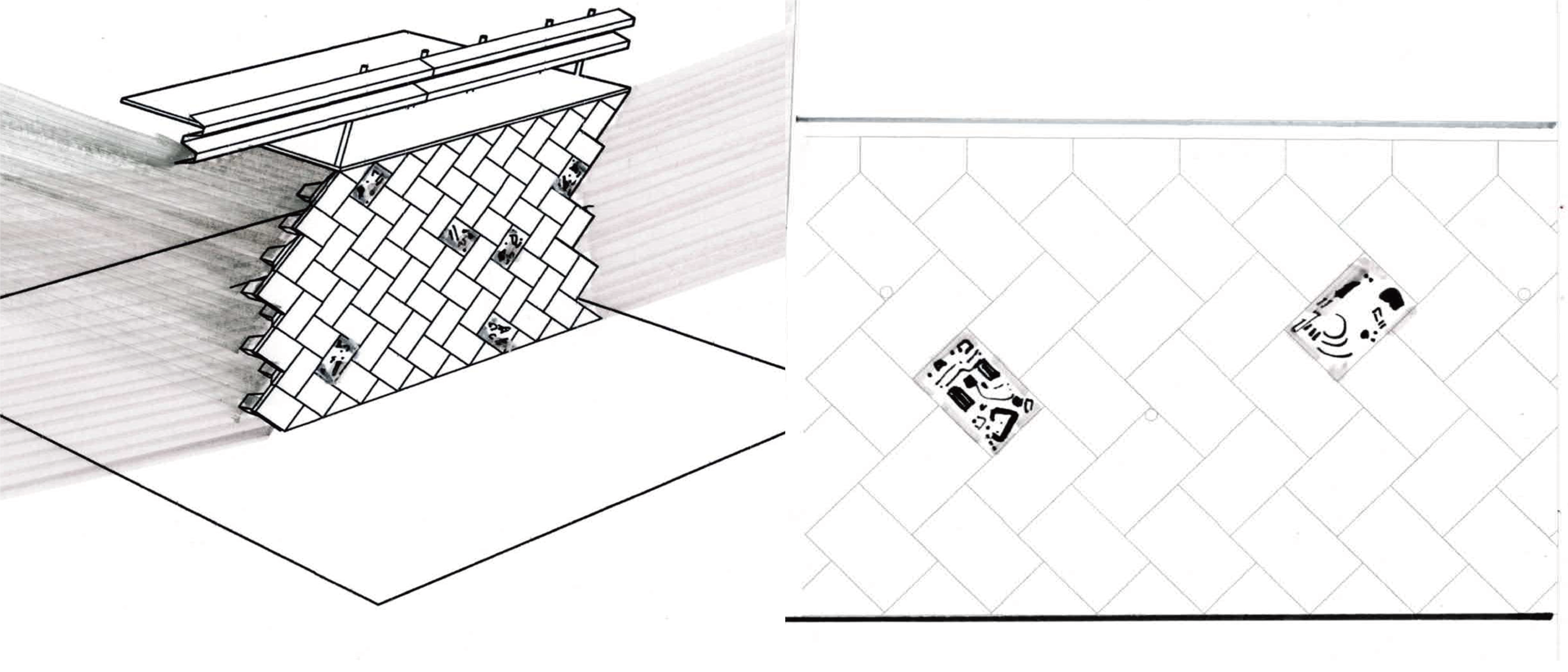
側壁からコンクリートブロックが欠落している場所がある。そこに自然石が不規則に詰められている様を見ていると、「この側壁にはどんな修復がふさわしいのか?」という問いが浮かんできた。それはモジュール化された側壁にどう介入できるかという戦いの始まりであった。
どんなかたちの、どんな感じの直し方が、私たちにはできるだろう。
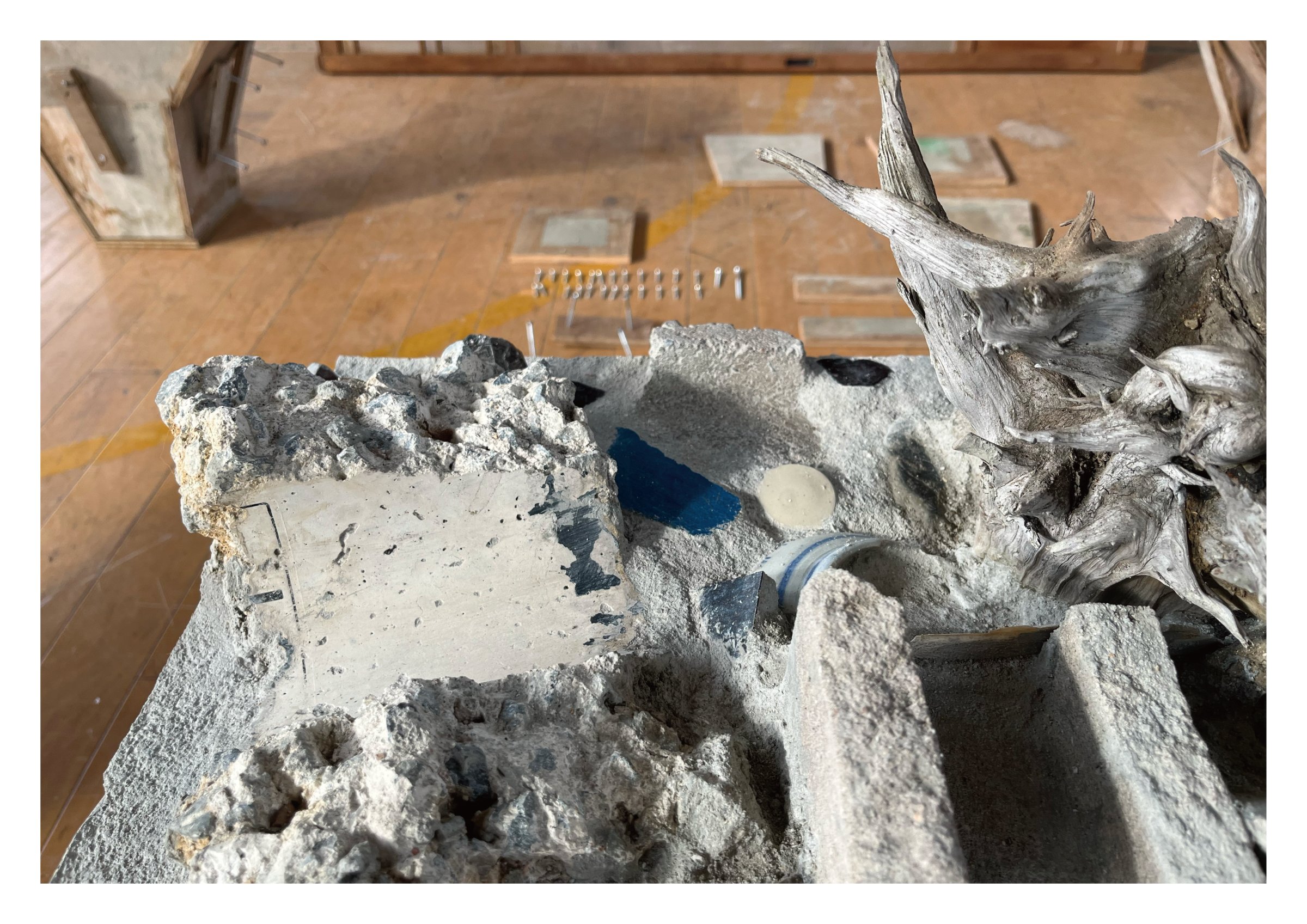
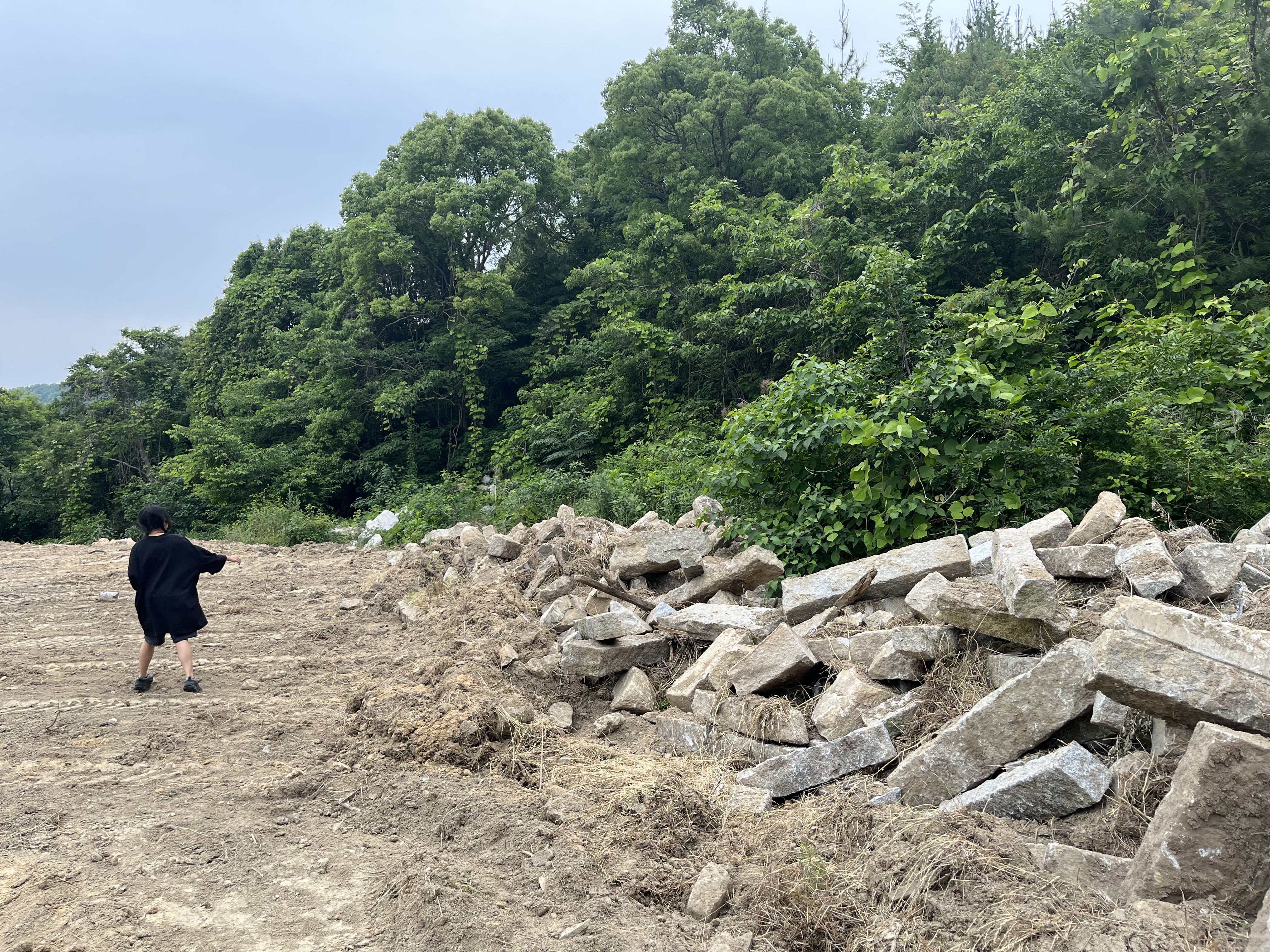
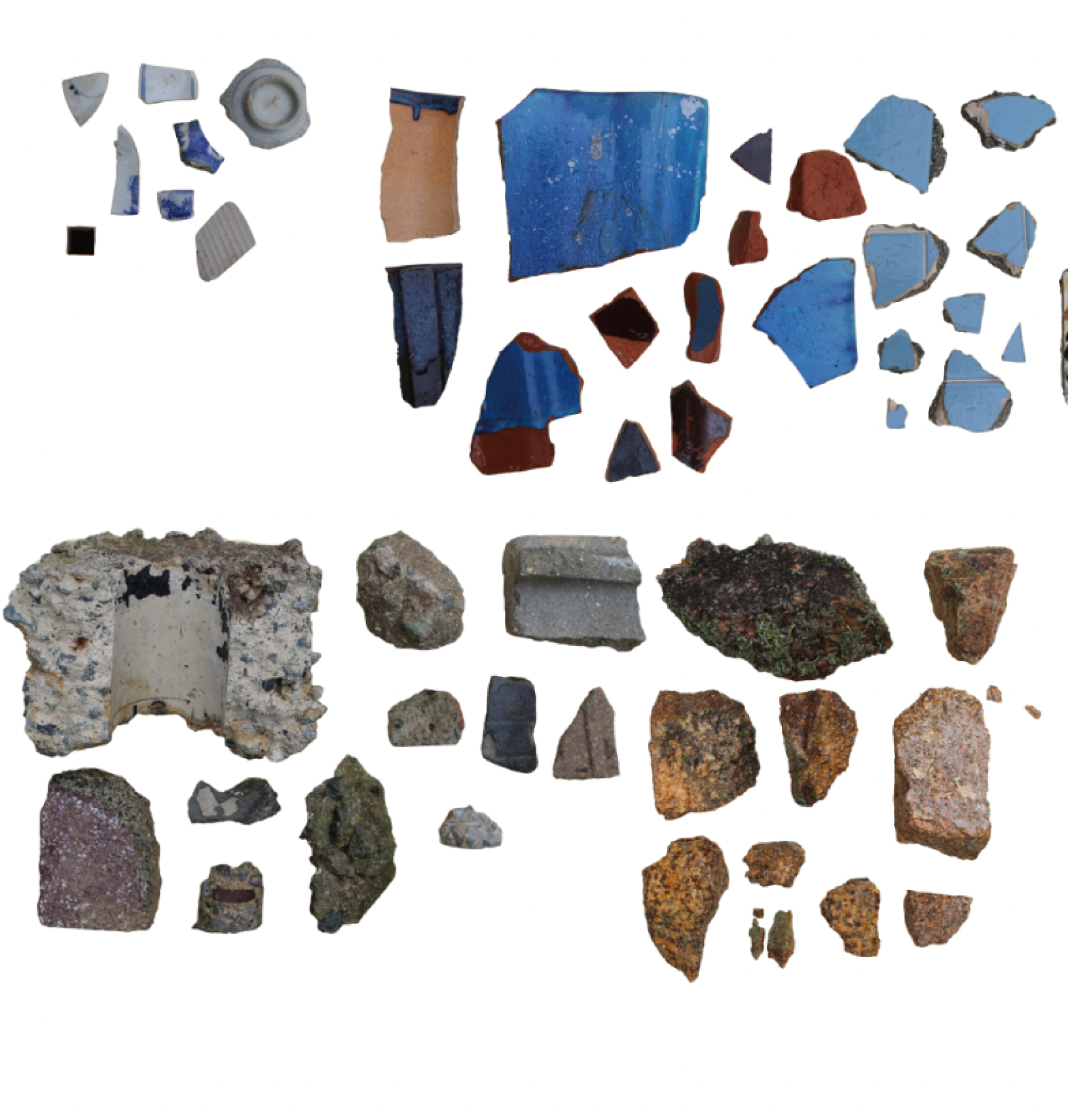
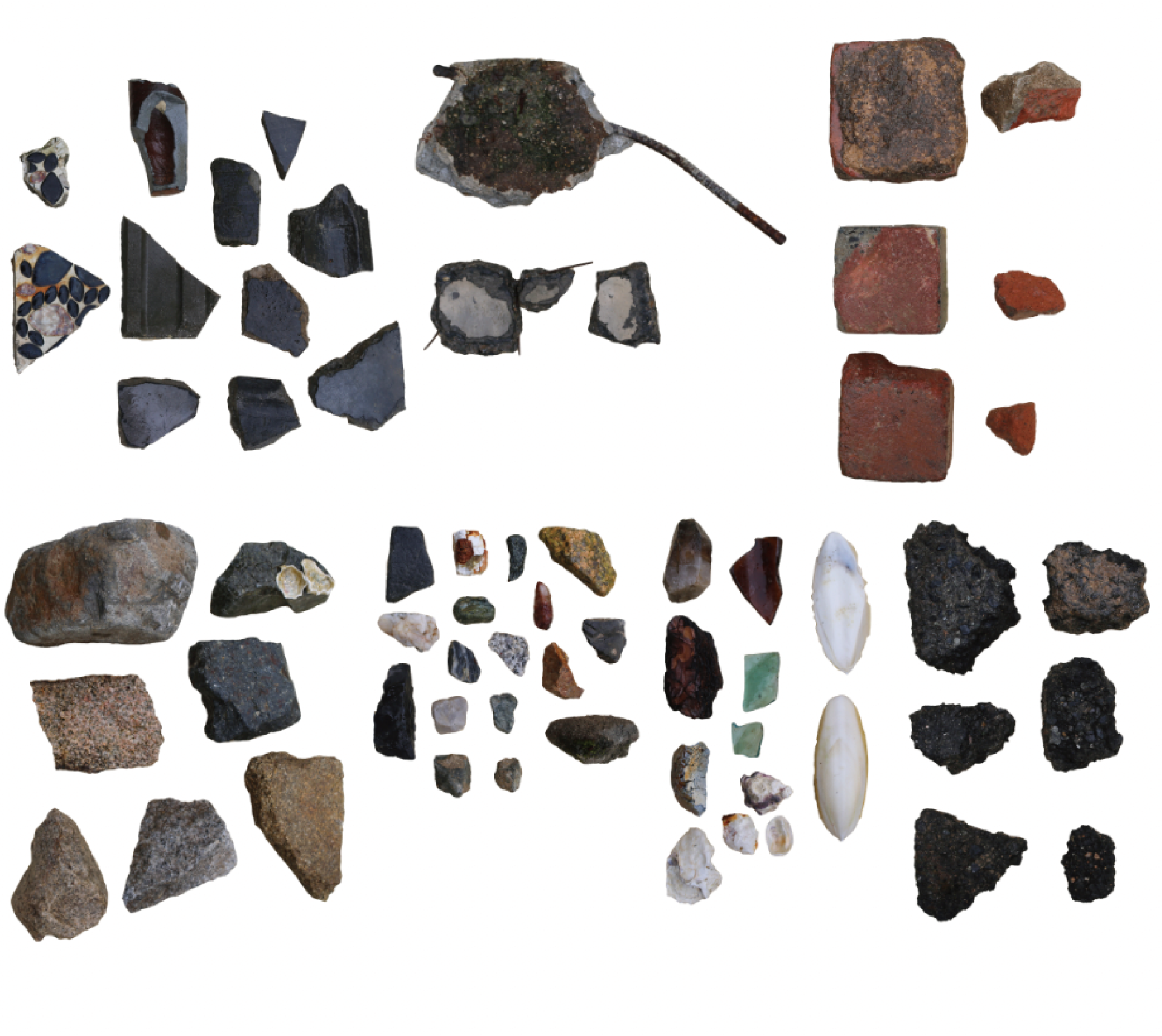
こう考えたとき、私たちが最初にできることは島の材料をあれこれ集めてみることだった。佐木島で集めたハードスケープ(人工的な無機資源)をもとに、「一点モノの工業製品」をつくってみる。そこから生まれるモノには、時間の物語が宿る——朽ちては建てる佐木島の物語が。修復はこれから先何度も繰り返されるだろう。その一回一回が、島の歴史へと人々を誘うのだ。
「あらゆる創作物にはエントロピーという代償がつきものである。あらゆる世代も、発展も、さらには情報さえも。いかなる系も、いかなる存在も、それ単独で思い返されることはないのだ。」— フェルナンデス=ガリアーノ
デザインは、「空間」と「時間」その両方に、新たな余白をつくり出す。逆説的にも、モジュールは場所性を生み出す装置となるのである。
How do irregularity and patterns represent themselves in a wall system? What can be learnt about a place by observing these systems?
Walking alongside the water channels of Sagishima, one may notice changes in pattern, texture and composition – recognizing the systems of patterns and irregularity that exist, created by the Tani Zumi.
Just as a pattern can be established it can be broken by a change in a system, cavities overtaken by local repair; typical refined concrete faces, pockets of vegetation and moments of nature and industrial material married to become one.
Cavities of such a highly engineered construction method like Tanigumi sparked the quest for what does repair of such consistency look like — these sites became opportunities to think about modularity.
What does repair look and feel like?
Within this opportunity, repair may invite a desire of boutique. Reconsidering industrial design through sculptural methods and collecting hardscape materials throughout the island, the forms tell a story of time — time and recreation.
Repair is a reiterative process — a reinvitation.
“All creation, all generations, all development, and even all information must be paid for in entropy. No system, no being can regenerate itself in isolation,” (Fernandez-Galiano, 91).
Intervention by design invites a chance to create space, both in space and time. Modularity as a means to mark place.
規則の中の不規則 --- 佐木島
の水路の壁
佐木島の水路の壁を眺めていると、規則的に積まれた壁の中に不規則な部分が現れることに気づきます。
Edge / Irregularity
When observing the walls of waterways of Sagishima, we noticed irregularities emerging within the otherwise regularly stacked walls.
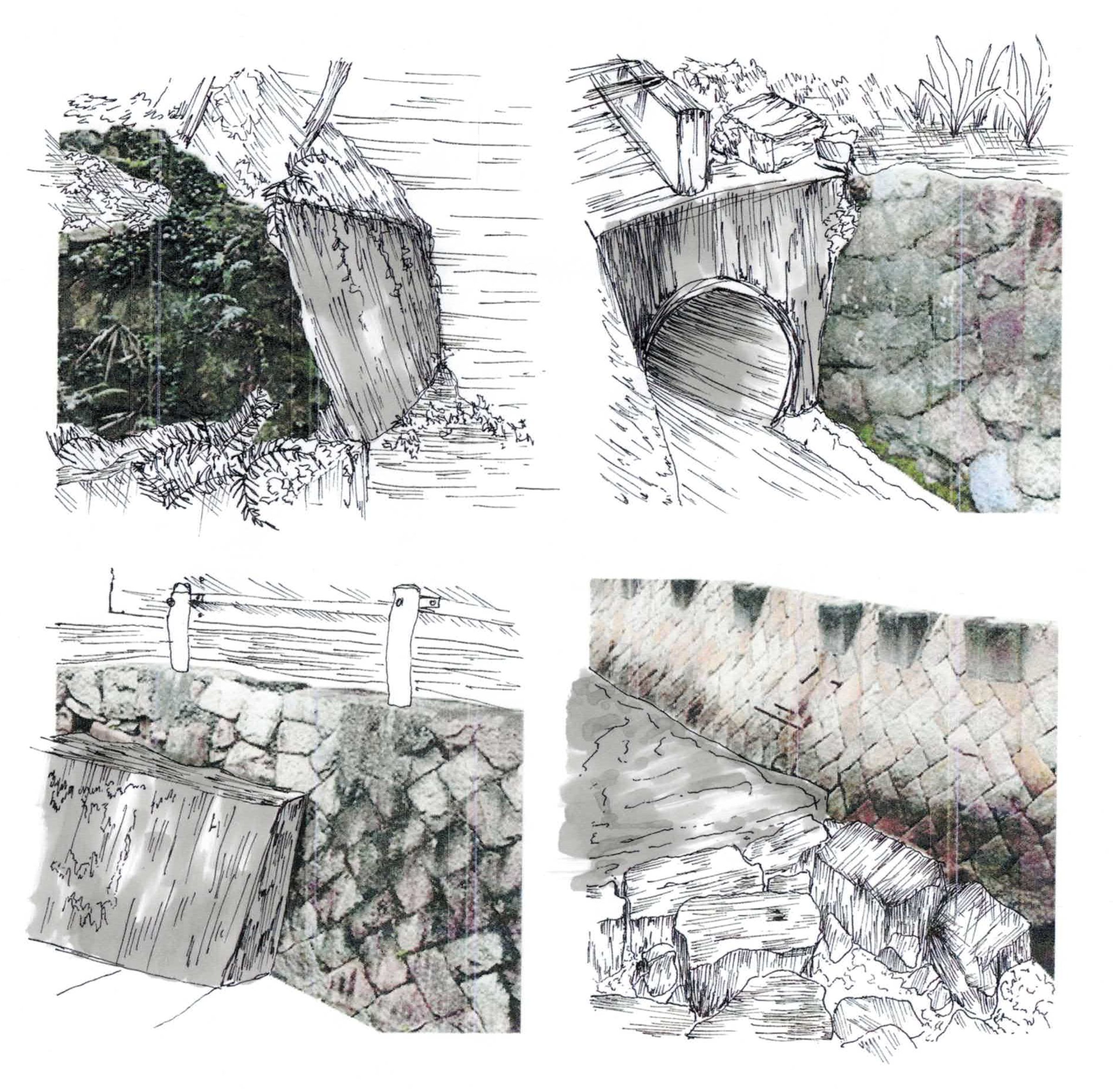
その中でも、規則的な谷積みのコンクリートブロック壁に、自然石を不規則に詰めて修復している場所に惹かれました。島の建設業者の方によれば、護岸の検査のためにブロックが抜かれたのではないかとのことです。
Among those irregularities, we were particularly attracted to a site where a wall of regularly stacked concrete blocks in the Tani-Zumi style had been repaired with irregularly placed natural stones. According to a local contractor on Sagishima, the block may have been removed for inspection of the wall.
佐木島の廃棄された無機資源からブロックをつくる
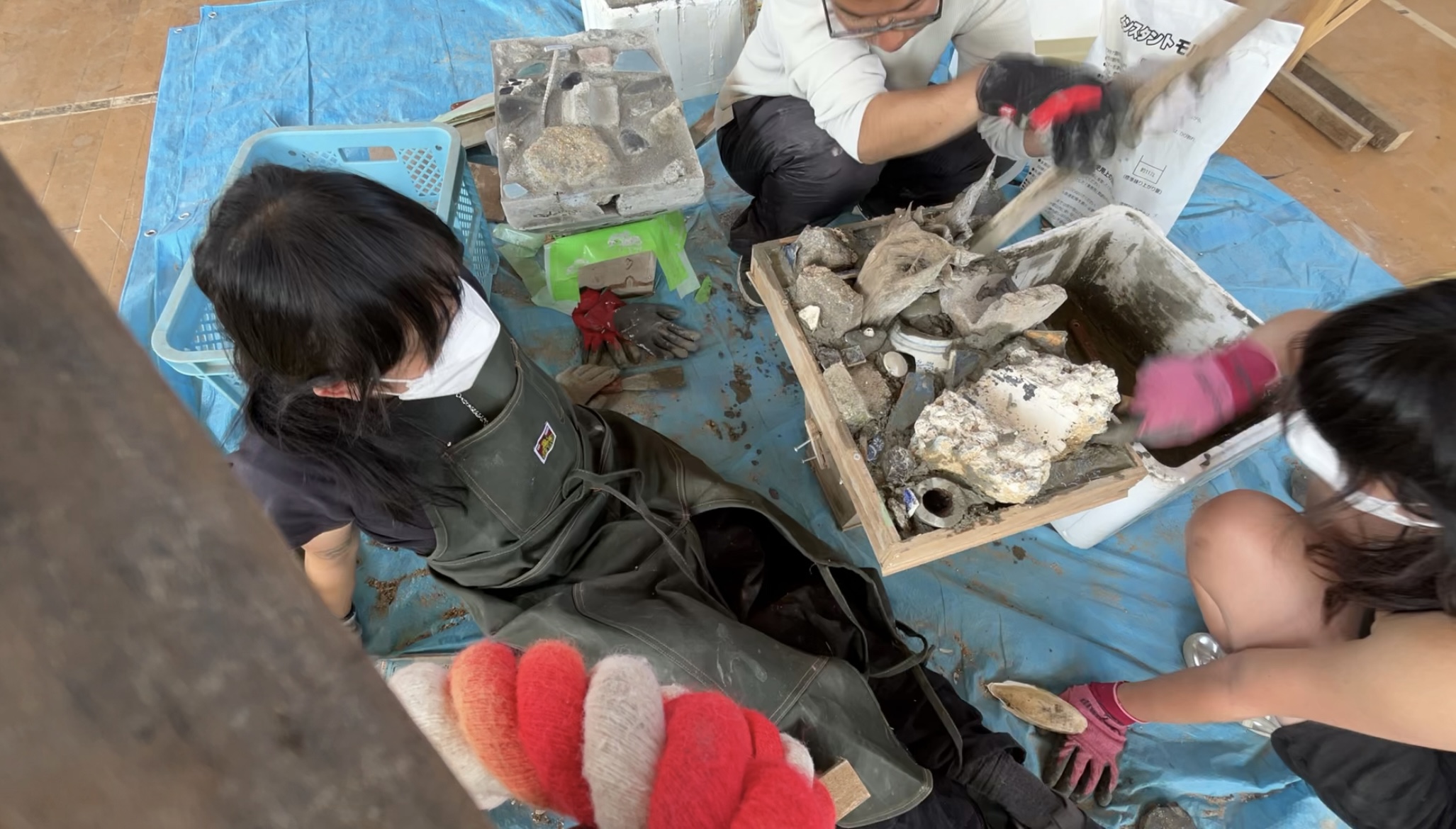
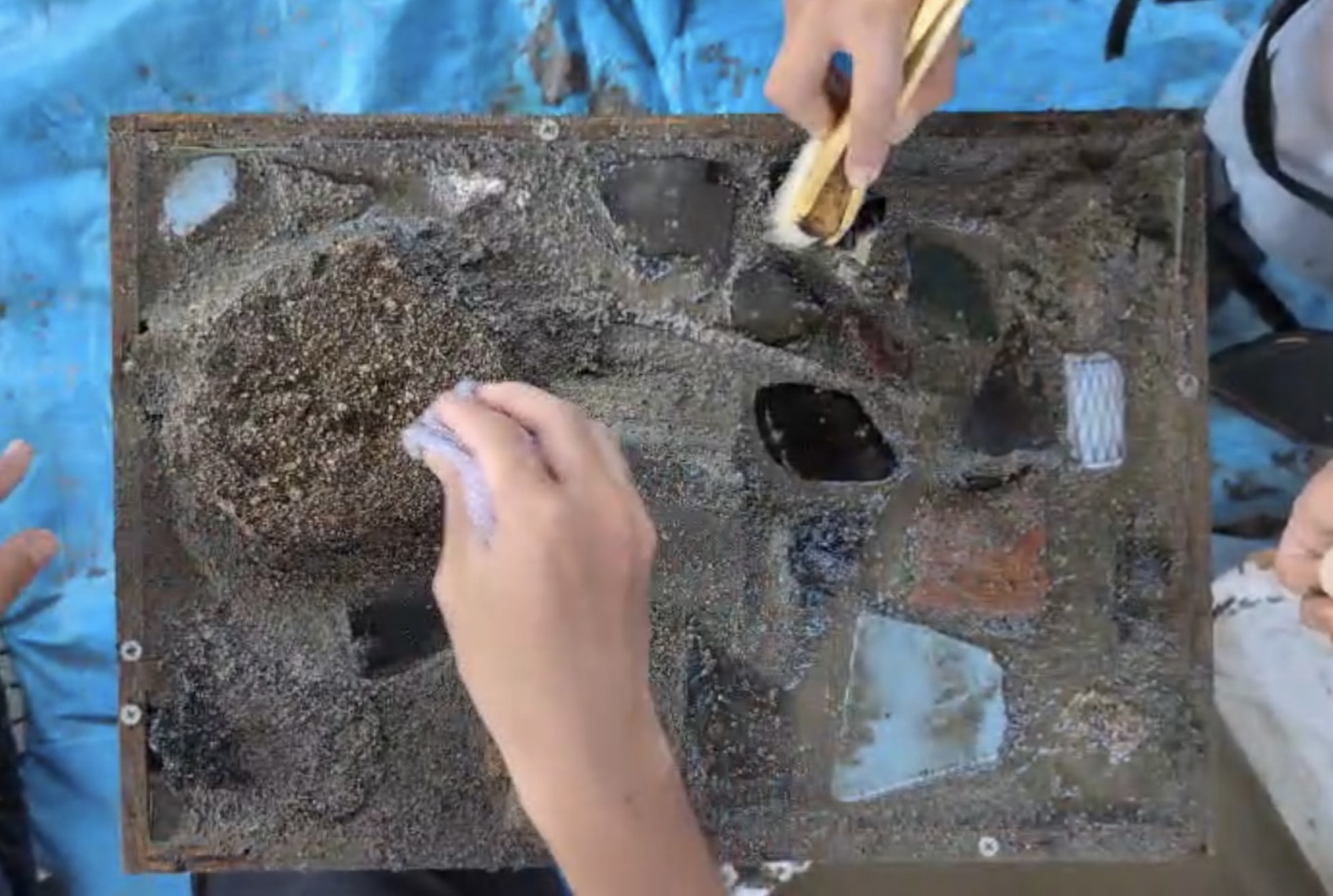
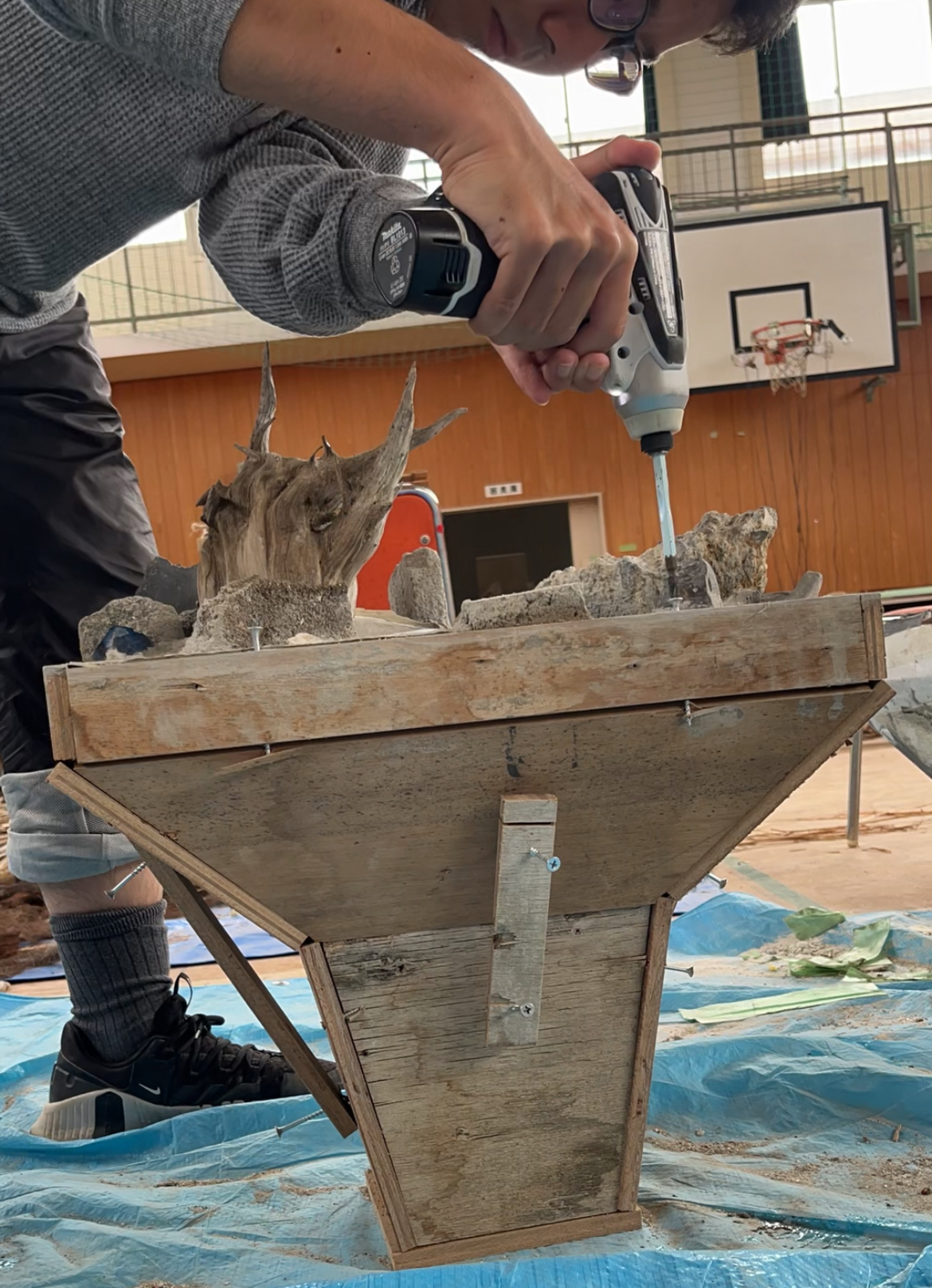
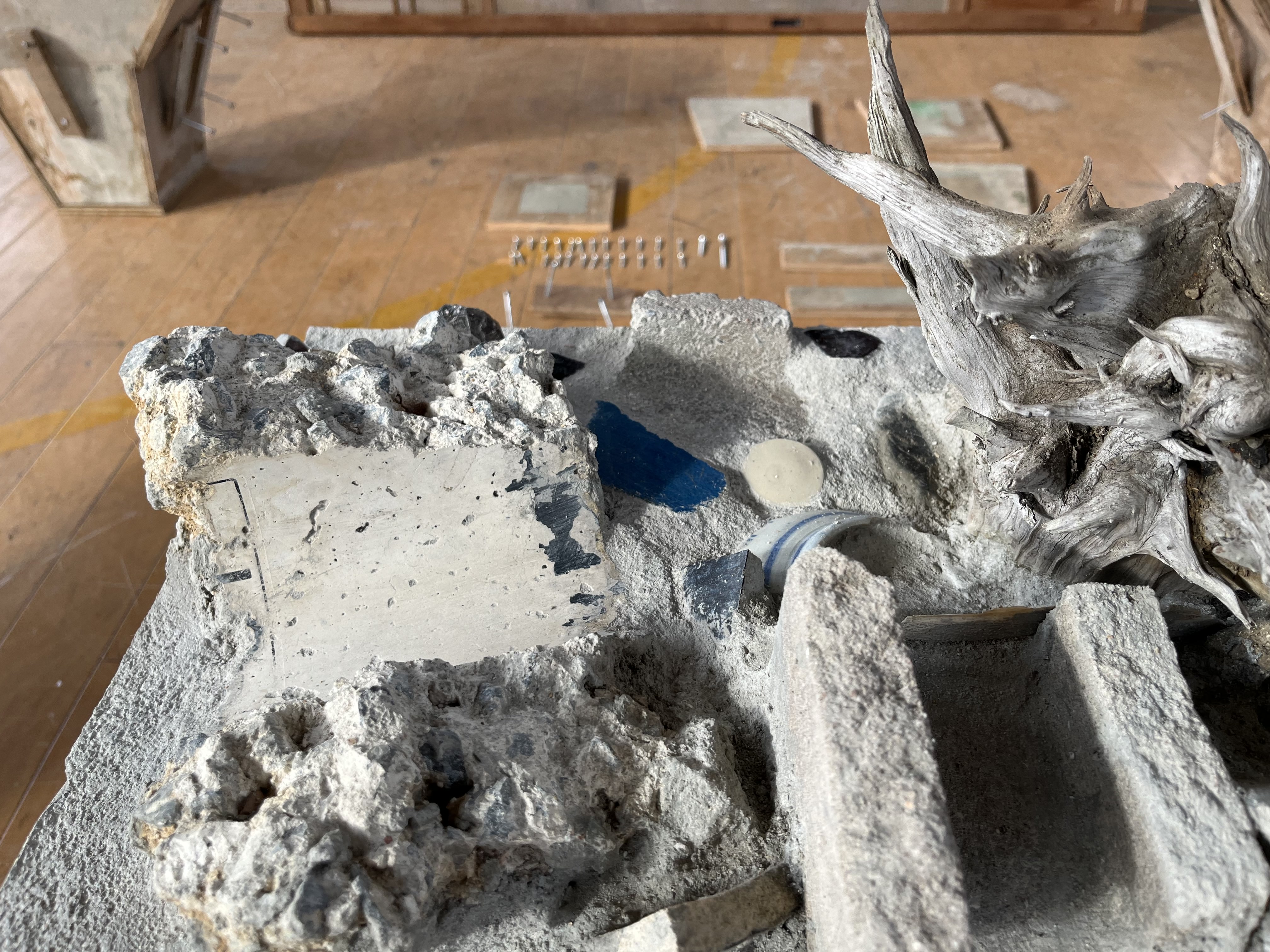
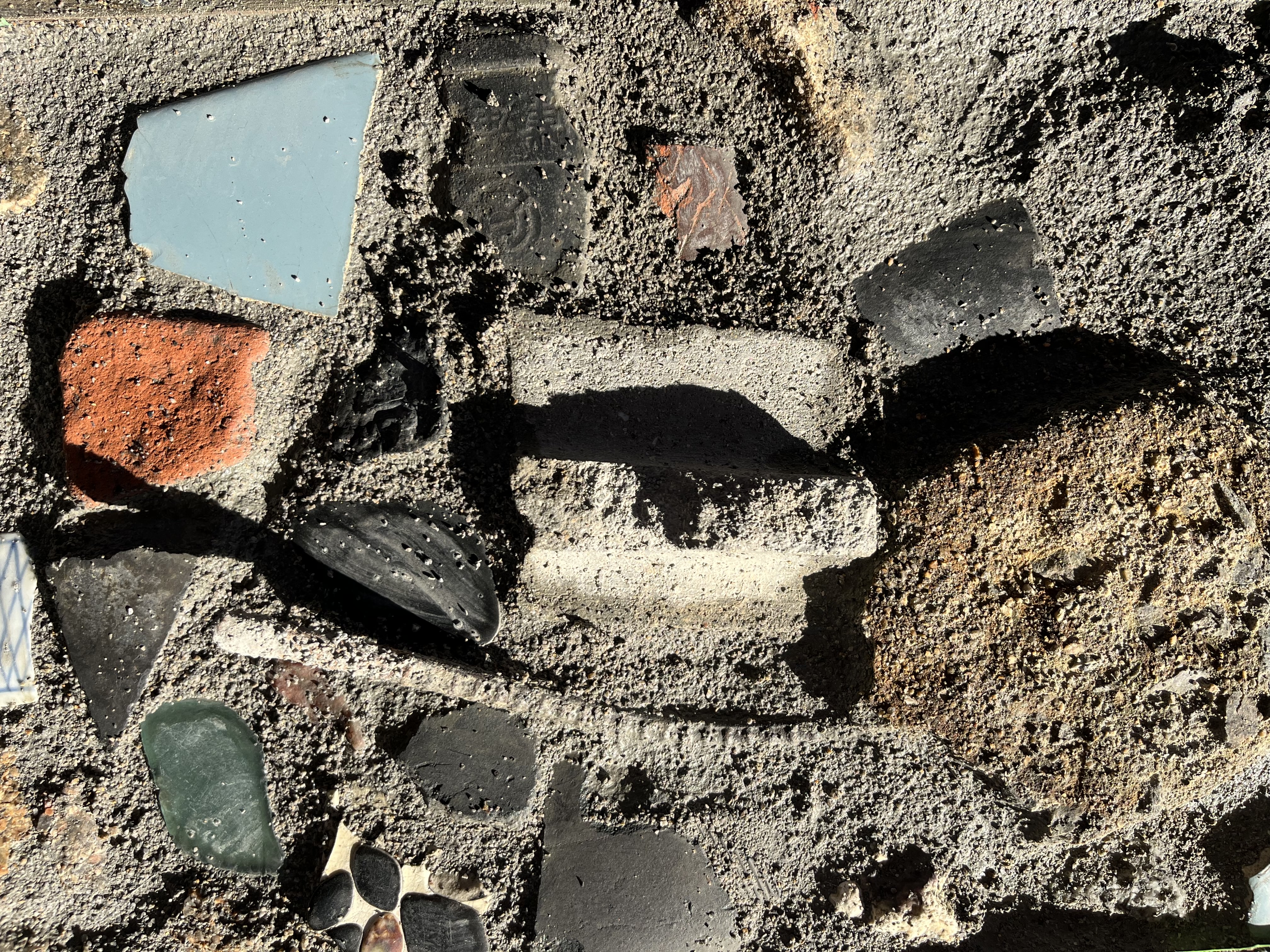
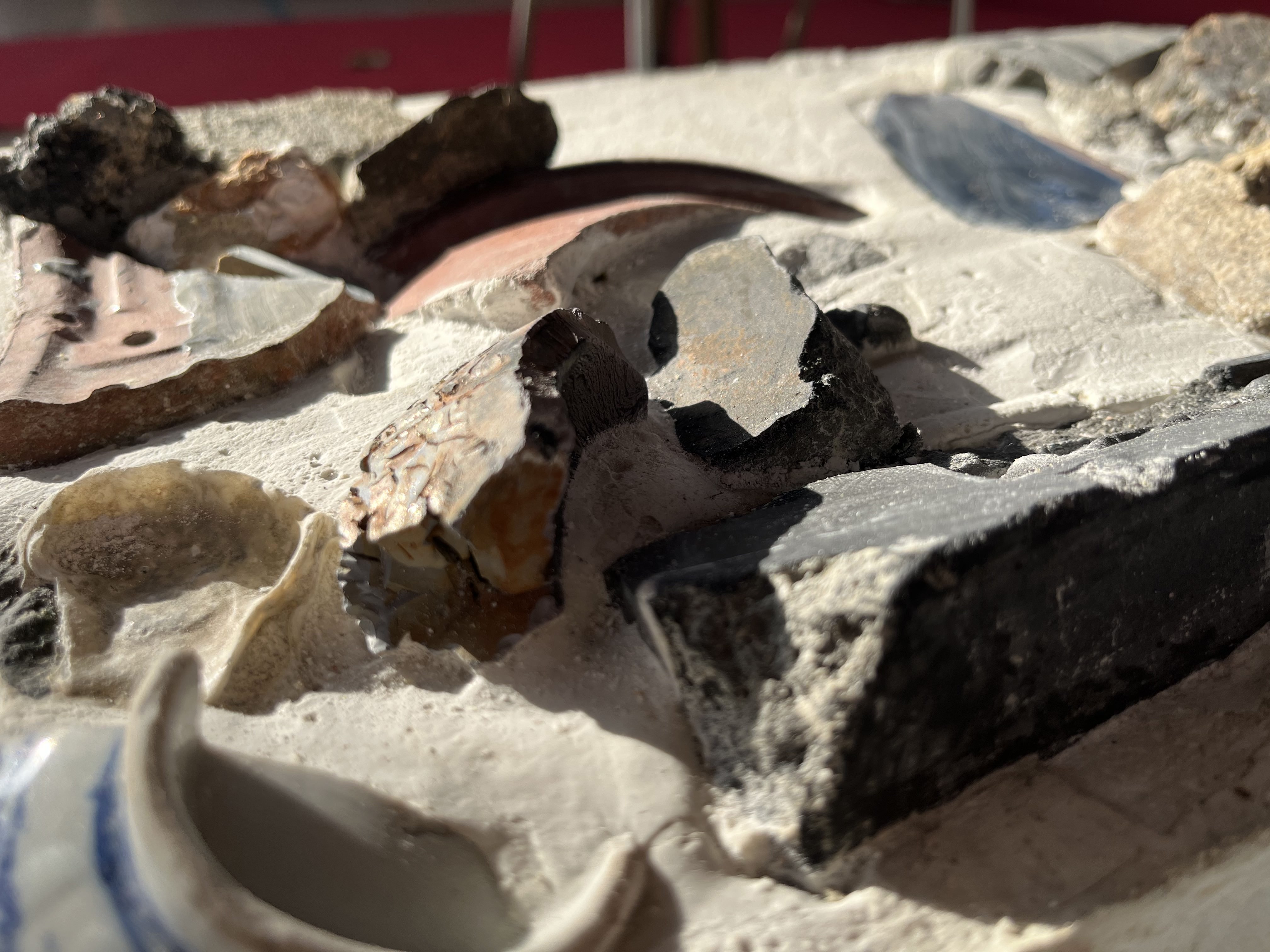
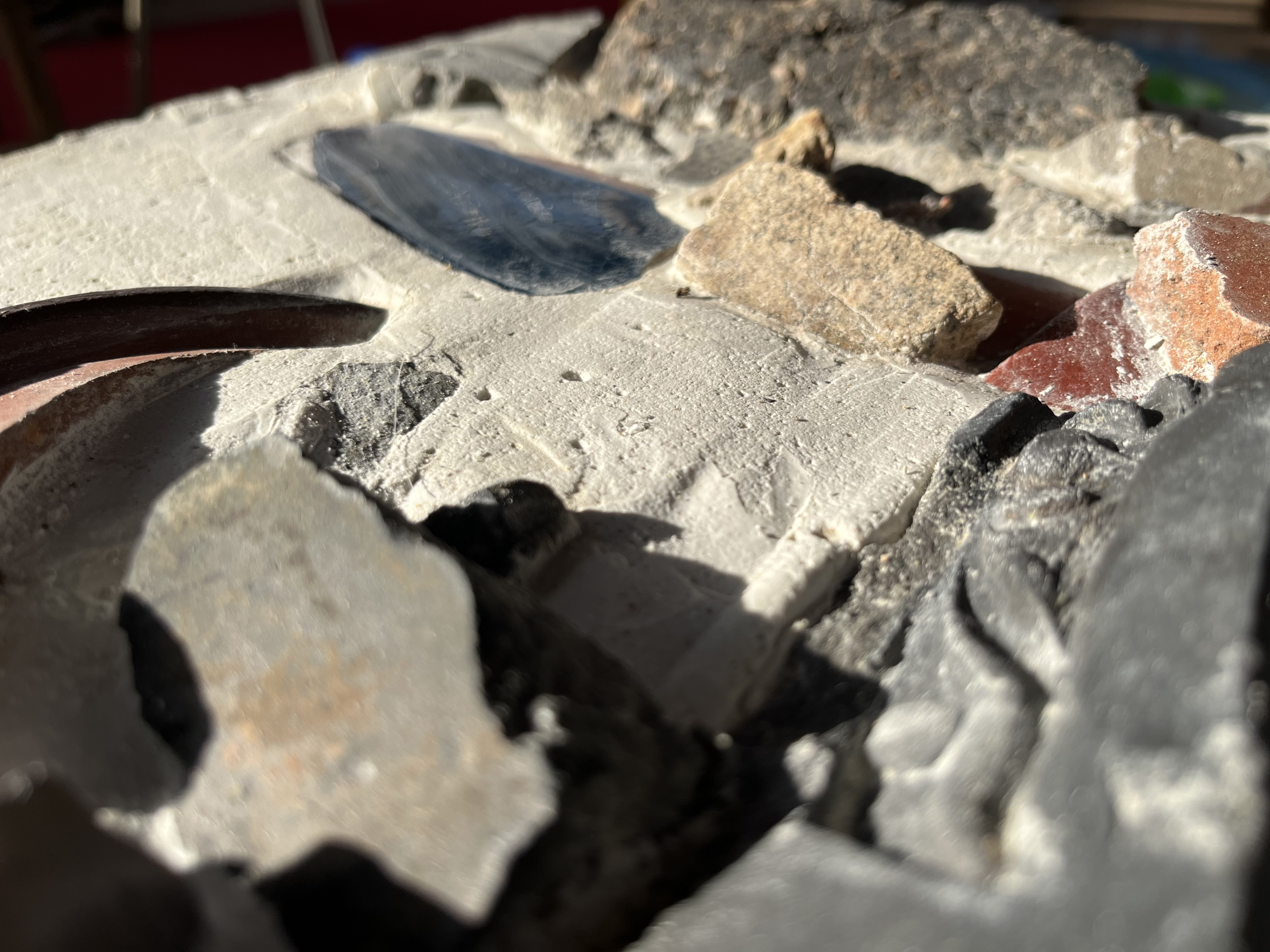
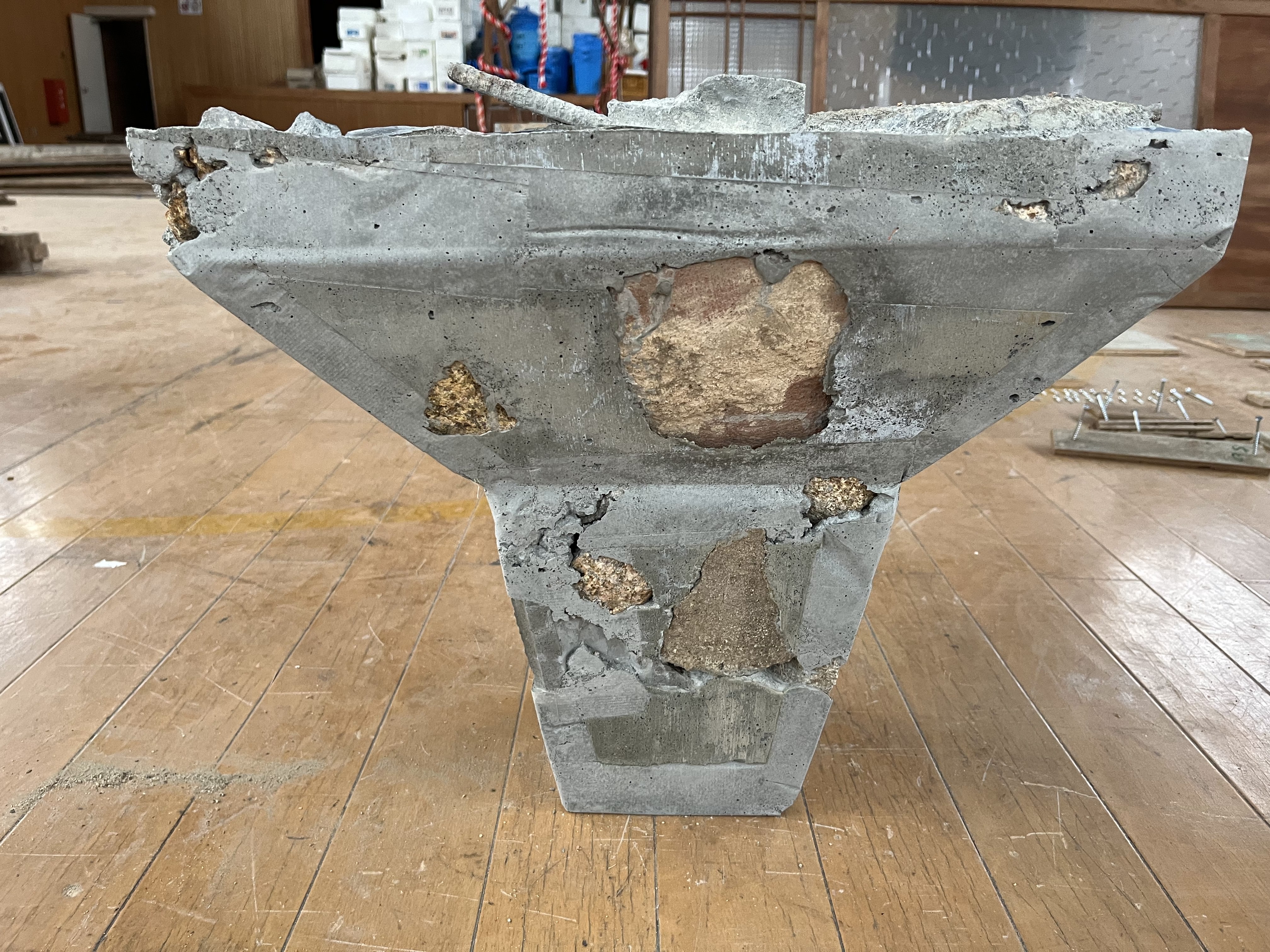
私たちは佐木島の廃棄された無機資源を集めてブロックをつくりました。このブロックで壁を修復することで、規則的なブロック壁の中に不規則性を取り入れられるのではないかと考えました。
Making concrete blocks from abandoned mineral materials
We collected mineral materials abandoned in Sagishima and made several blocks. By repairing the wall with this block, irregularities can be incorporated into otherwise regular walls.
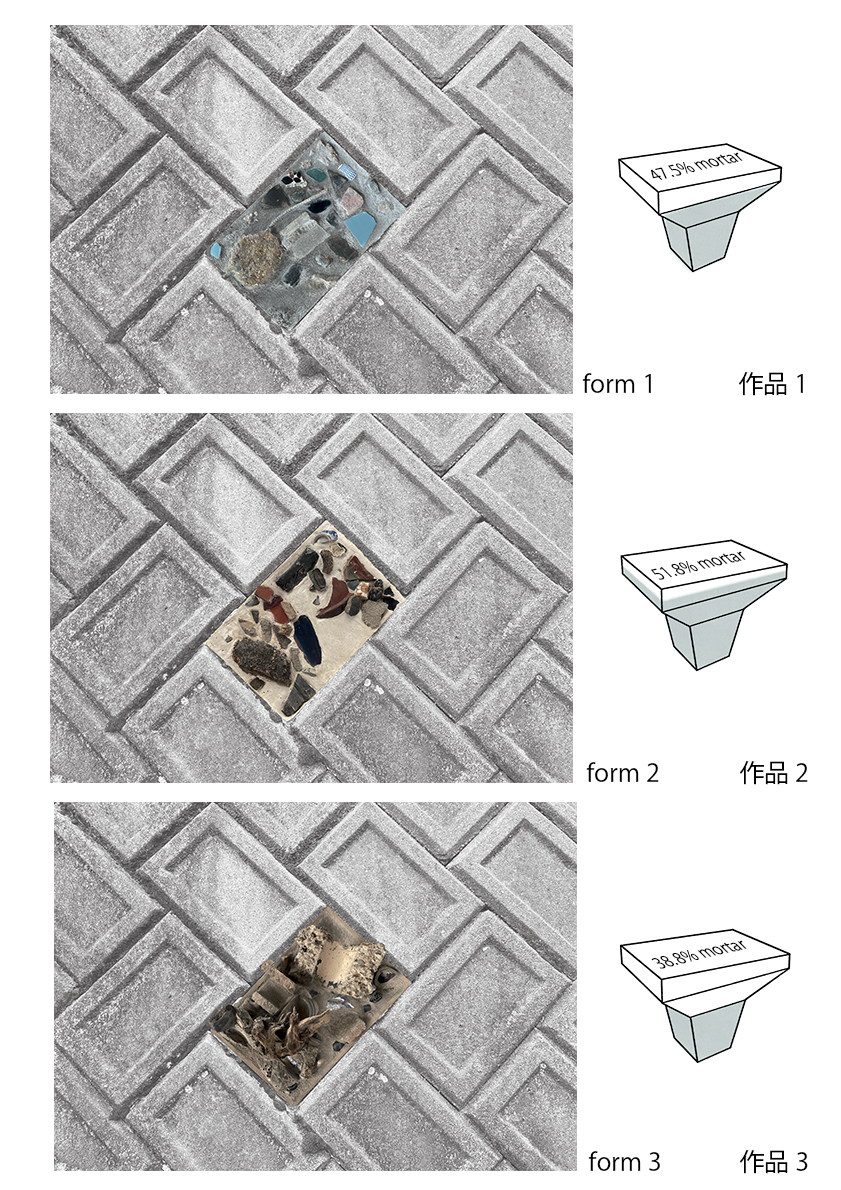
ブロックによる修復で水路をもっと楽しく
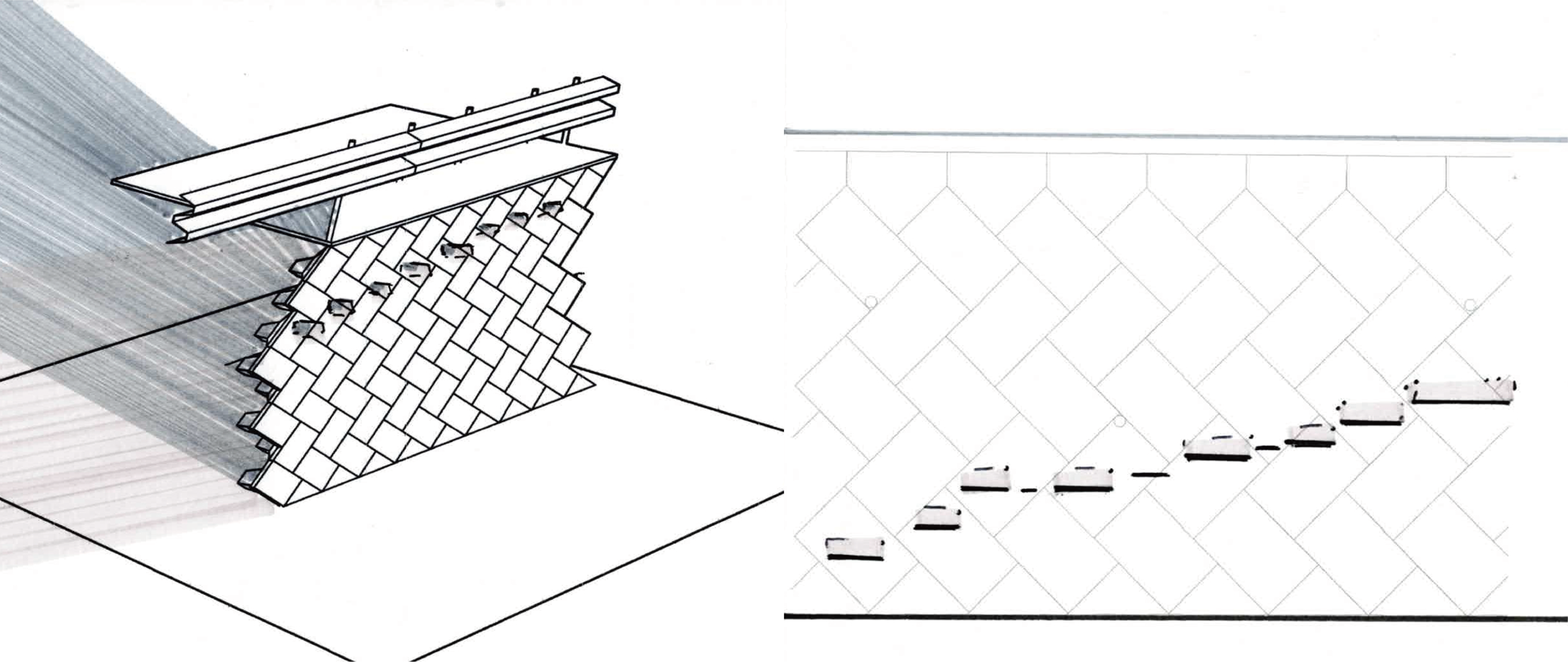
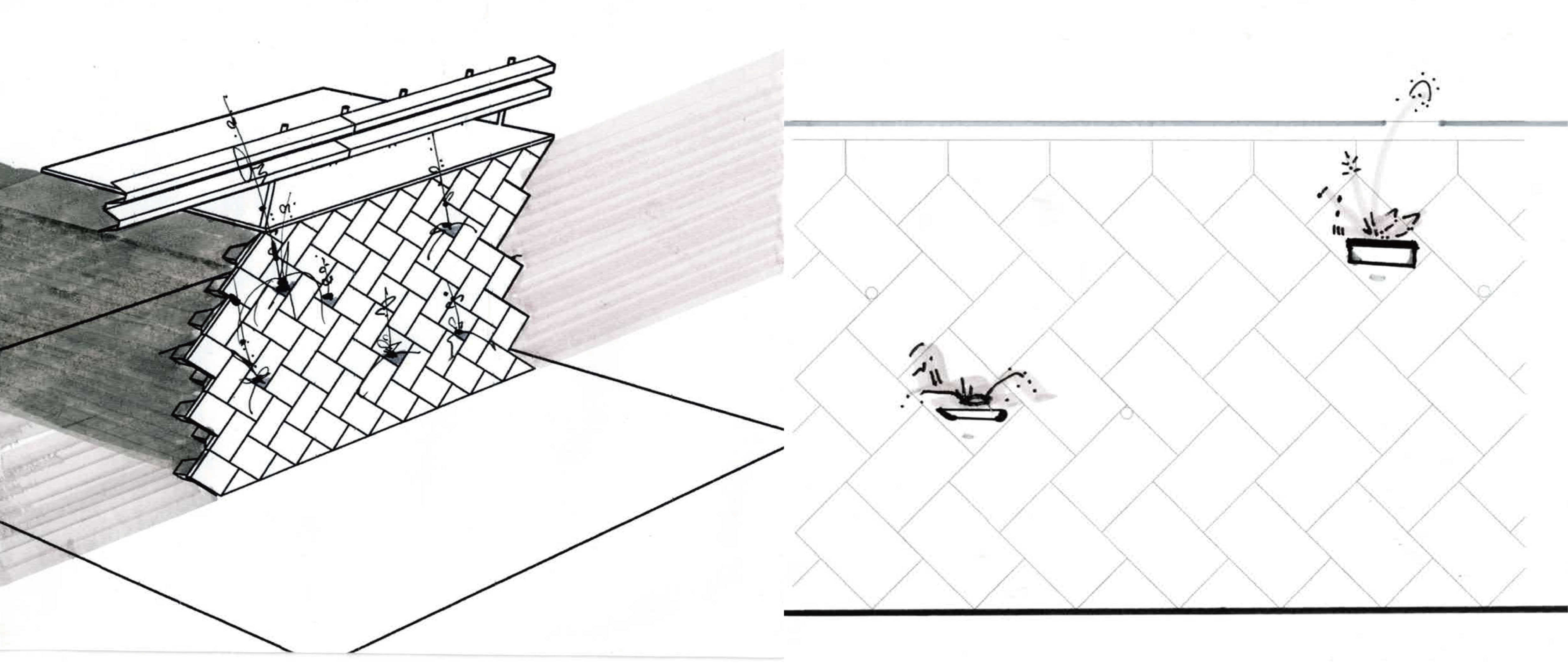
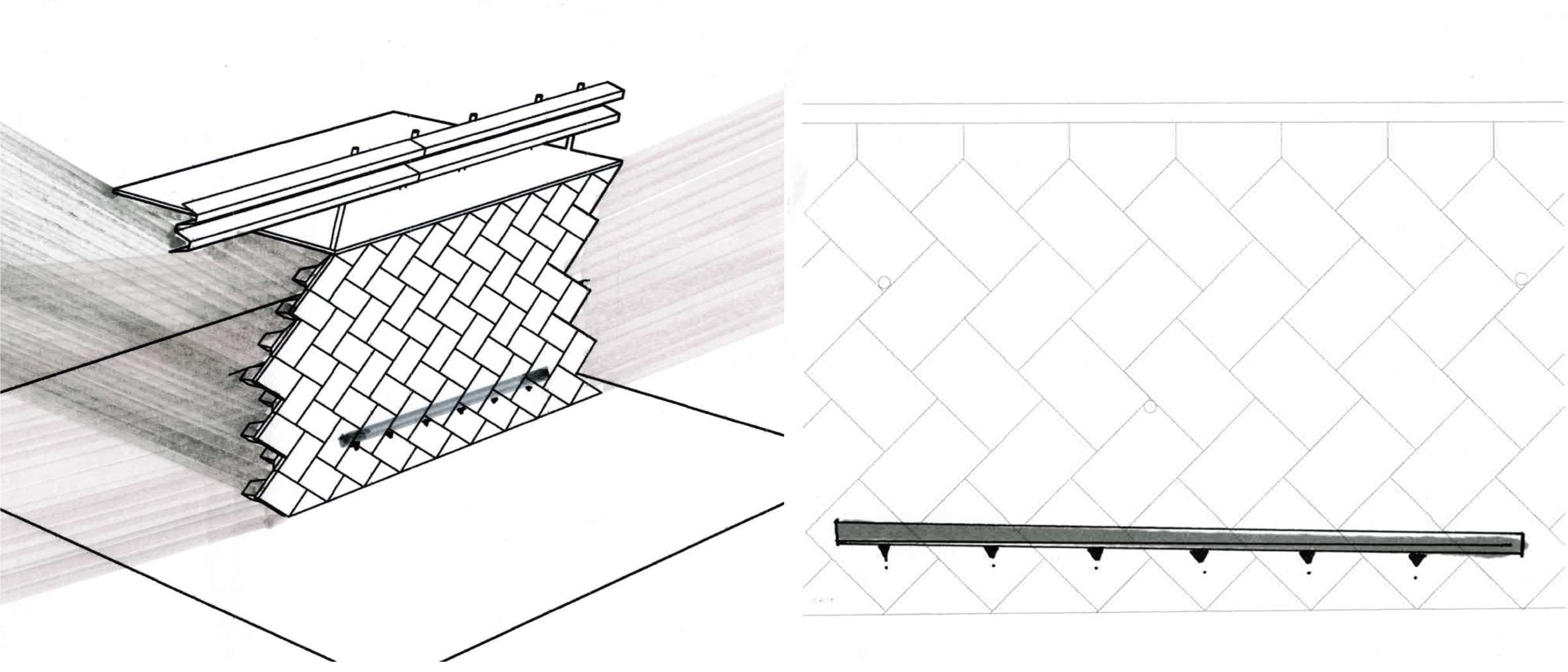
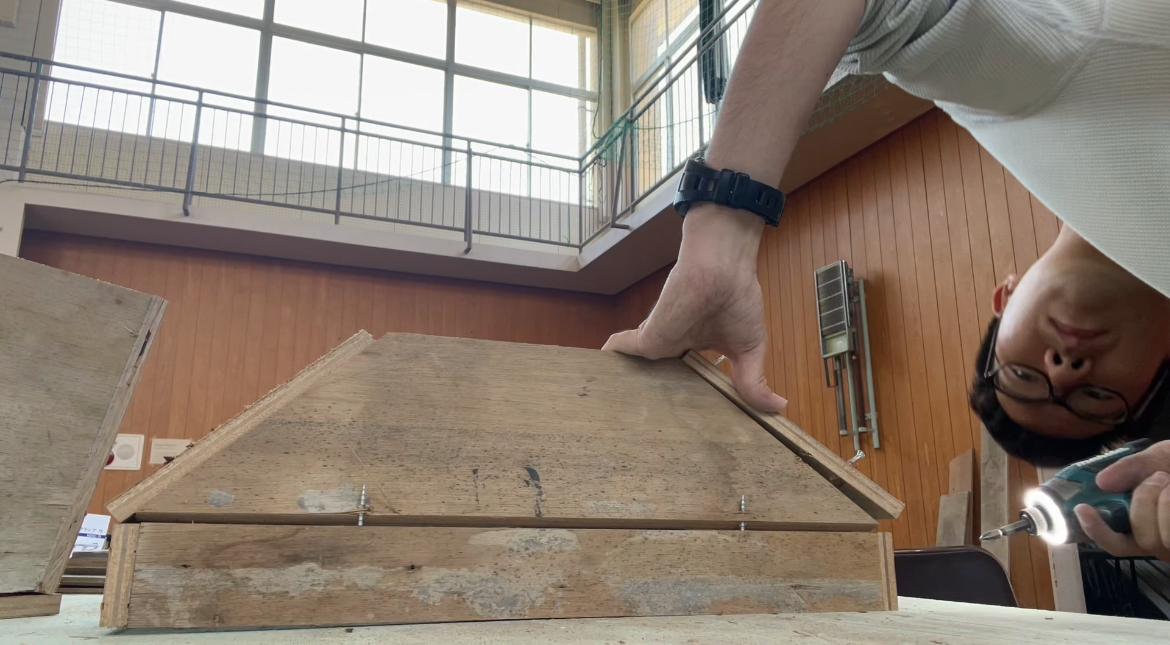
機能を持ったブロックで壁を修復すれば、水路に簡単に降りられるようになったり、水路の壁がにぎやかになったりしてもっと楽しい場所になります。
Making the waterway more enjoyable through wall repair
By repairing the wall with functional blocks, the waterway can become a more enjoyable place — allowing easier access to the water and bringing more vibrancy to the walls.