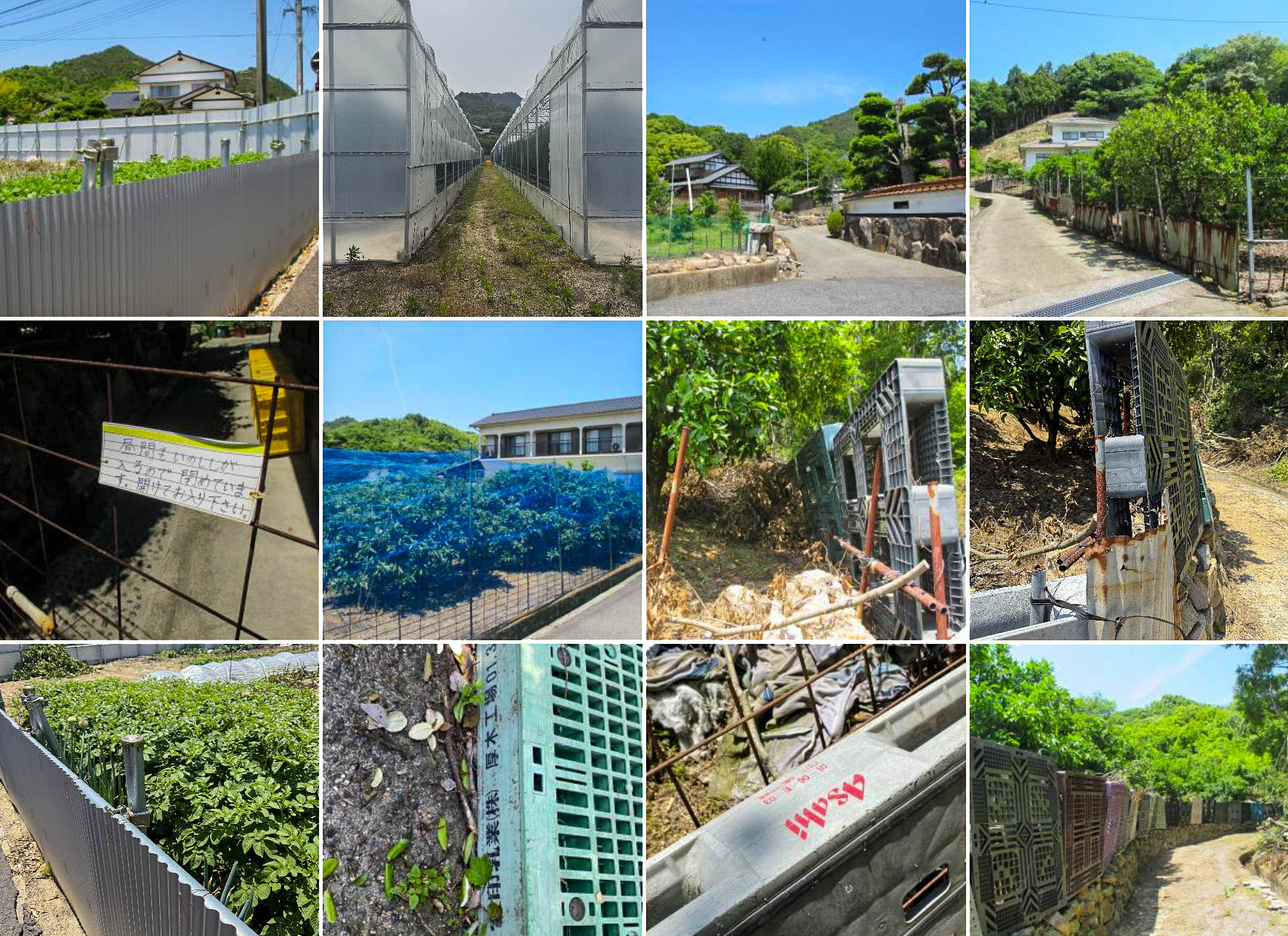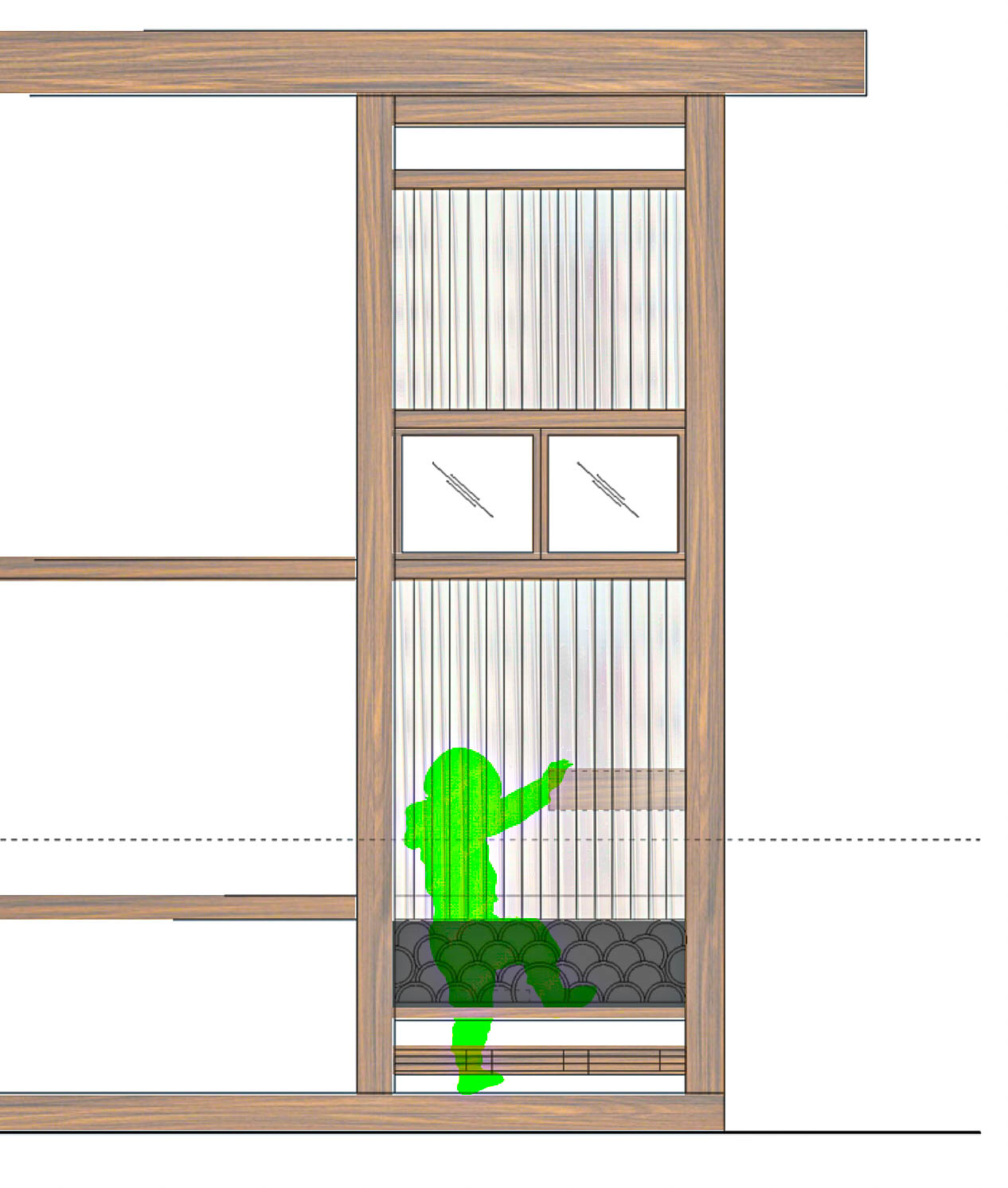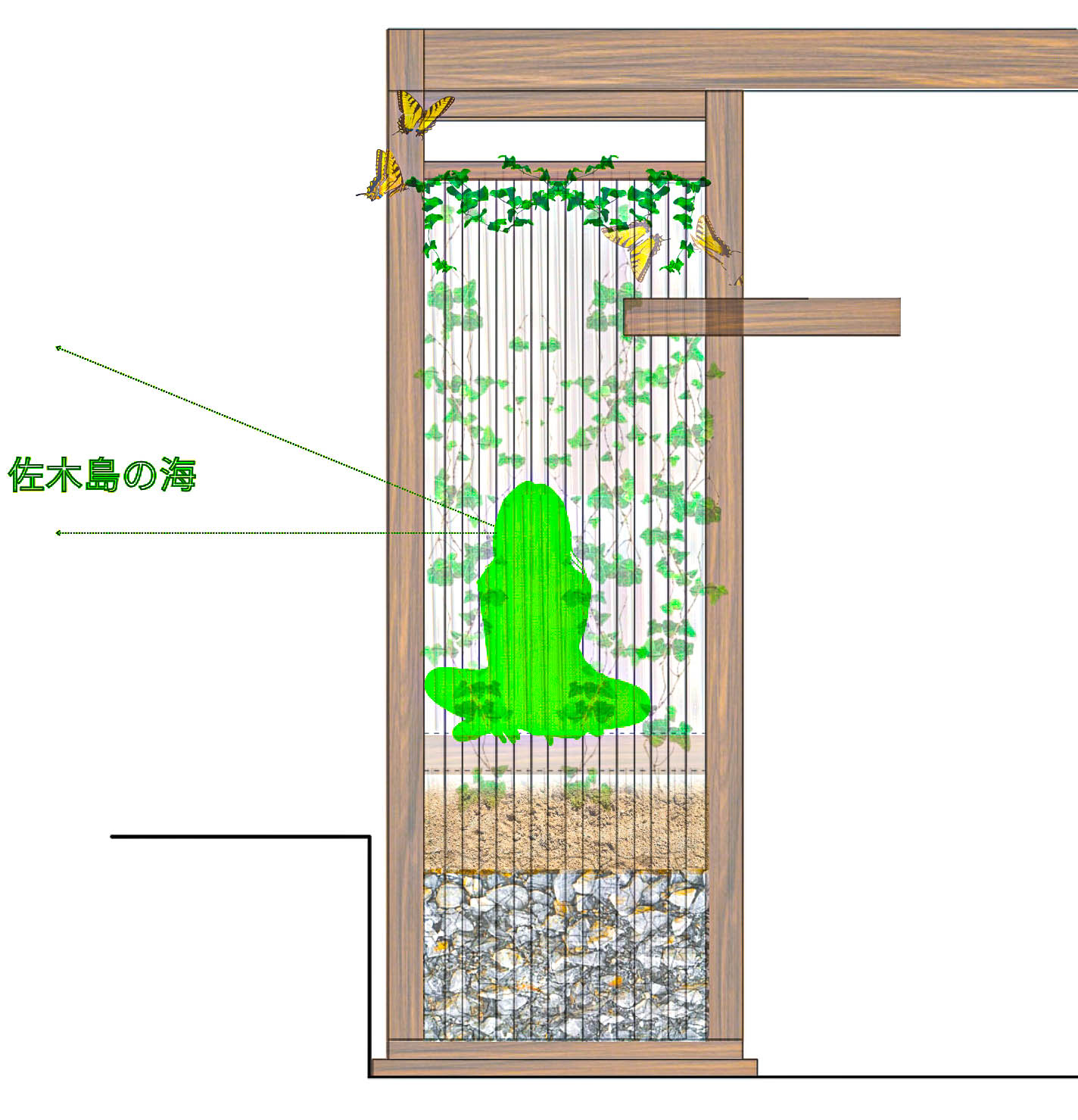
壁とは何でしょうか?
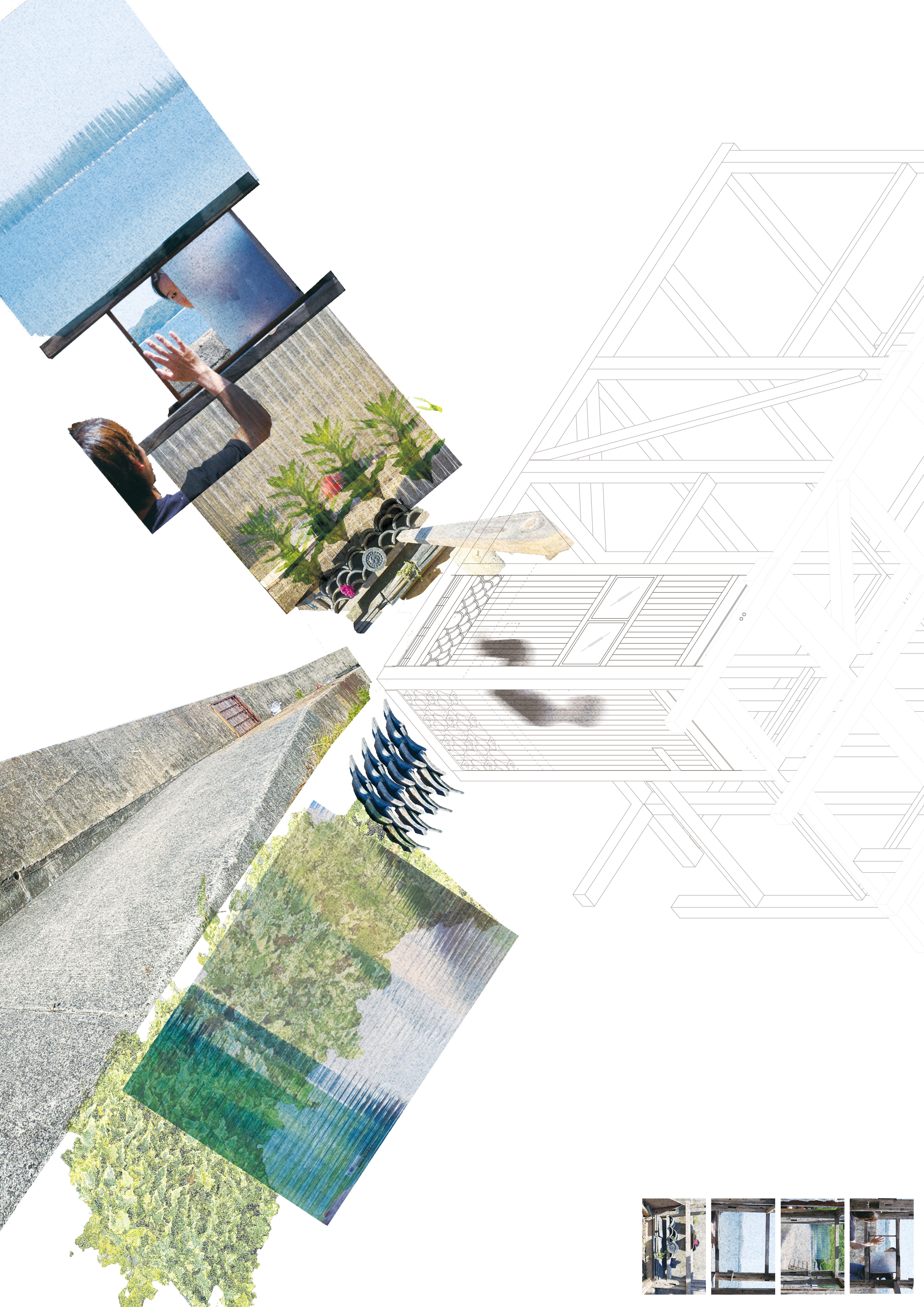
佐木島において、農業や住環境の中で使われる壁や柵は、単なる「分けるための構造物」ではありません。それは、人と土地、そして手に入る素材との関係性を映し出す、生きたインフラです。
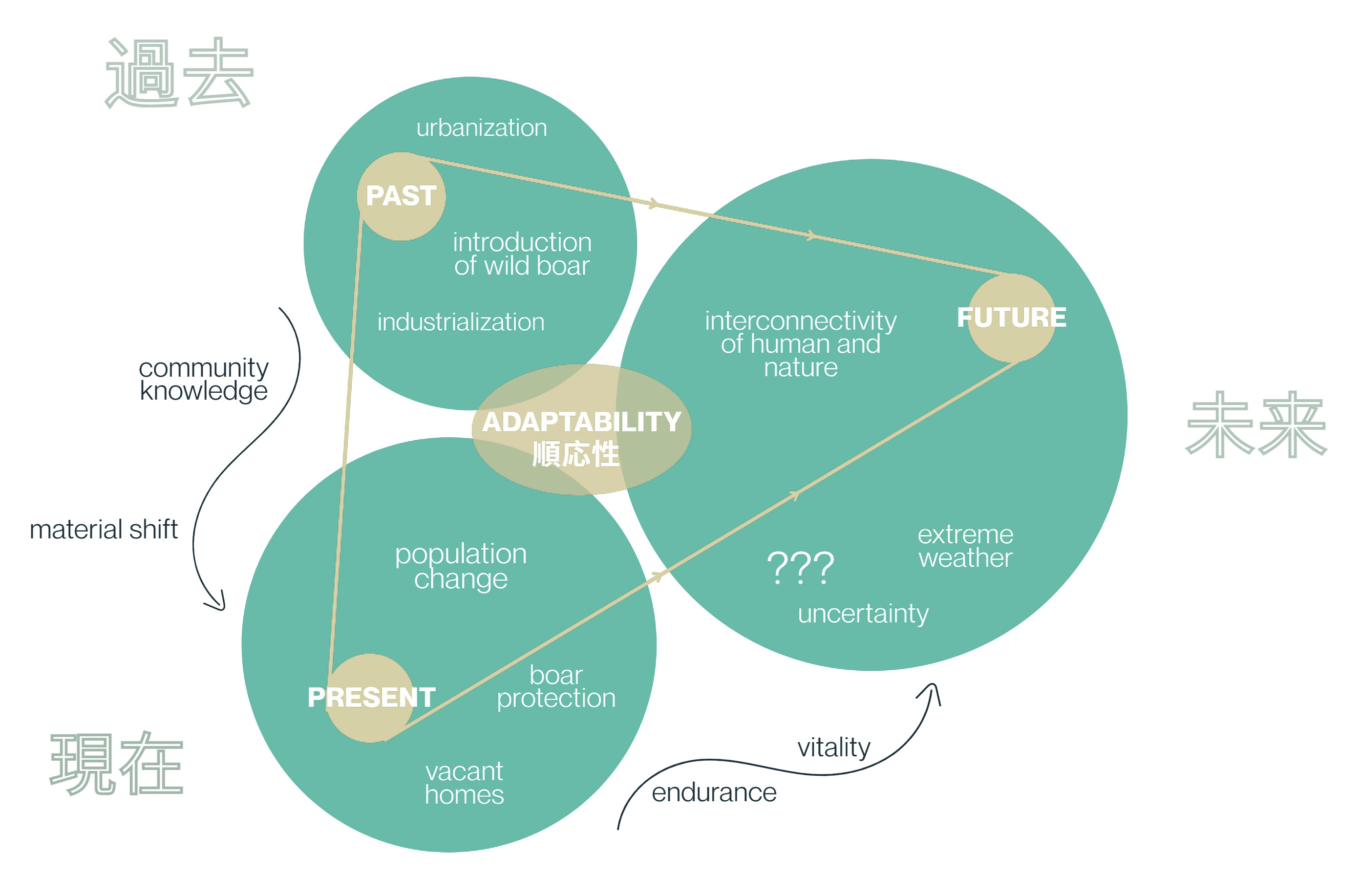
佐木島の住民は、手に入る資源を再利用しながら、空間を区切り、作物を守り、動物を管理し、風・イノシシ・台風・潮風といったダイナミックな自然の力に対処してきました。このような文脈において、壁とは**「適応のための足場」**であり、固定されたオブジェクトではなく、安定と変化のあいだを調整するための構造なのです。
What is a wall?
In Sagishima, in agriculture and settlement spaces, walls and fences are not simply objects of separation, they are living infrastructures that reflect the relationship between people, land, and material availability.
Sagishima residents have repurposed available resources to define space, protect crops, manage animals, and negotiate dynamic natural forces (winds, boar, typhoons, salt air).
Thus, in this context, the wall is a scaffolding of adaptability, not a fixed object, but a negotiation between stability and change.
佐木島における壁・柵・境界は、未来の不確実性の中で生態的なレジリエンスを育むために、保護と接続の両方を担う「適応型インフラ」として、どのように設計できるでしょうか?
How can walls, fences, and boundaries on Sagishima be designed as adaptive infrastructures that both protect and connect, fostering ecological resilience amid future uncertainties?
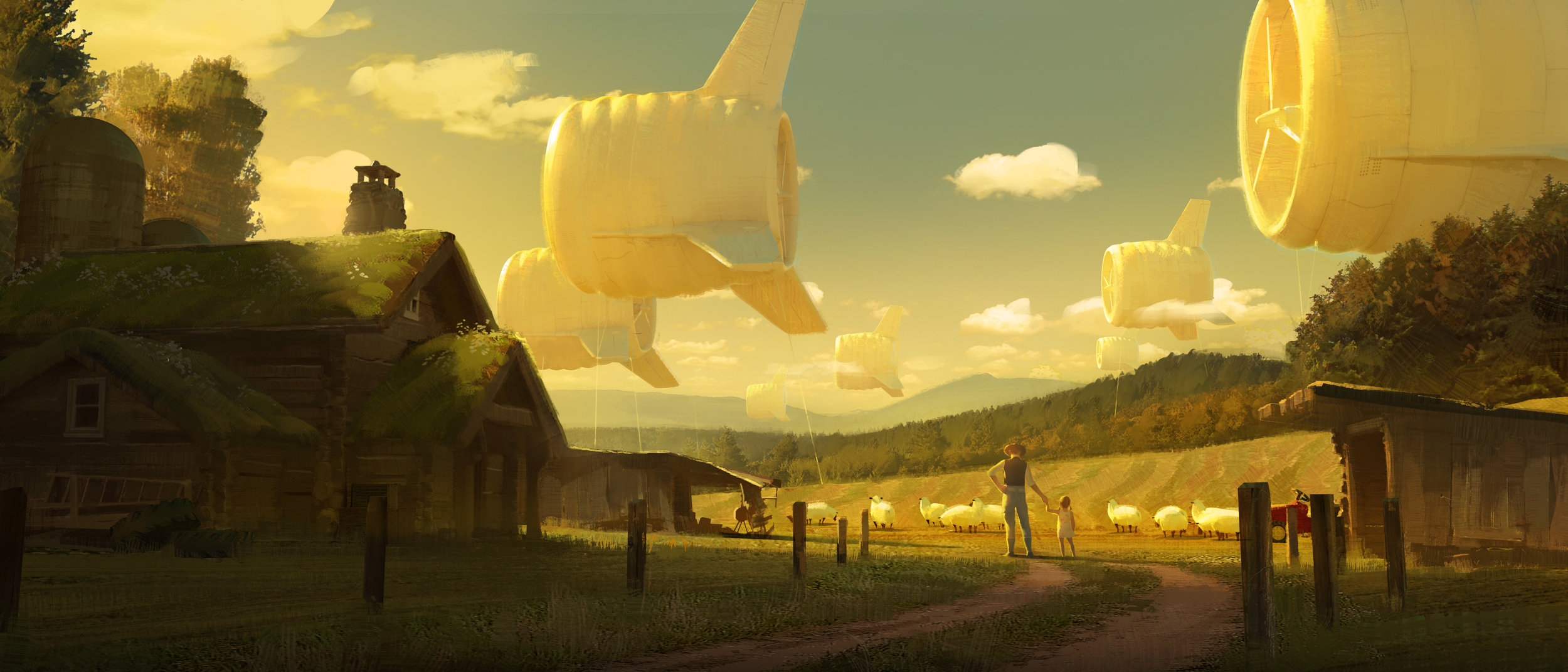
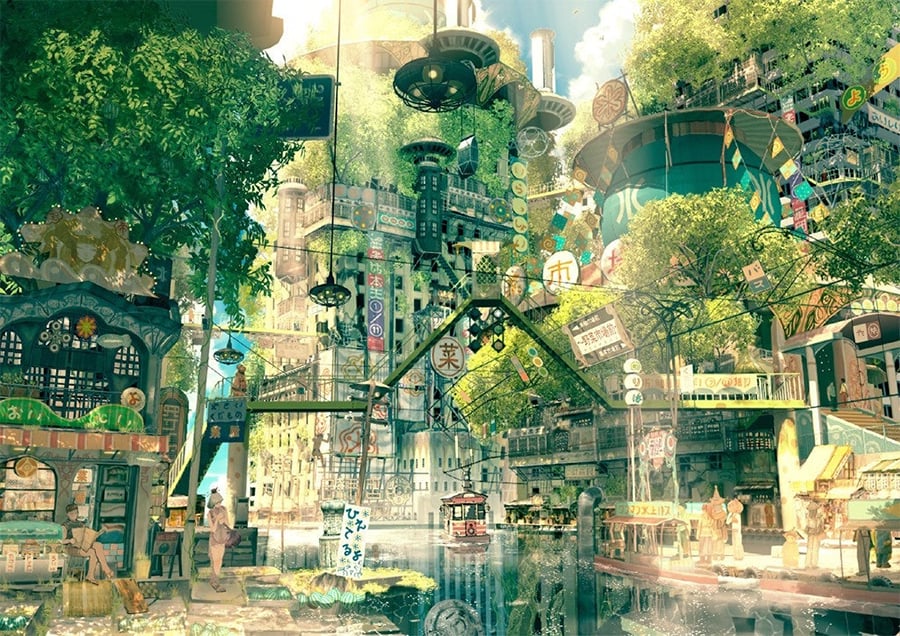
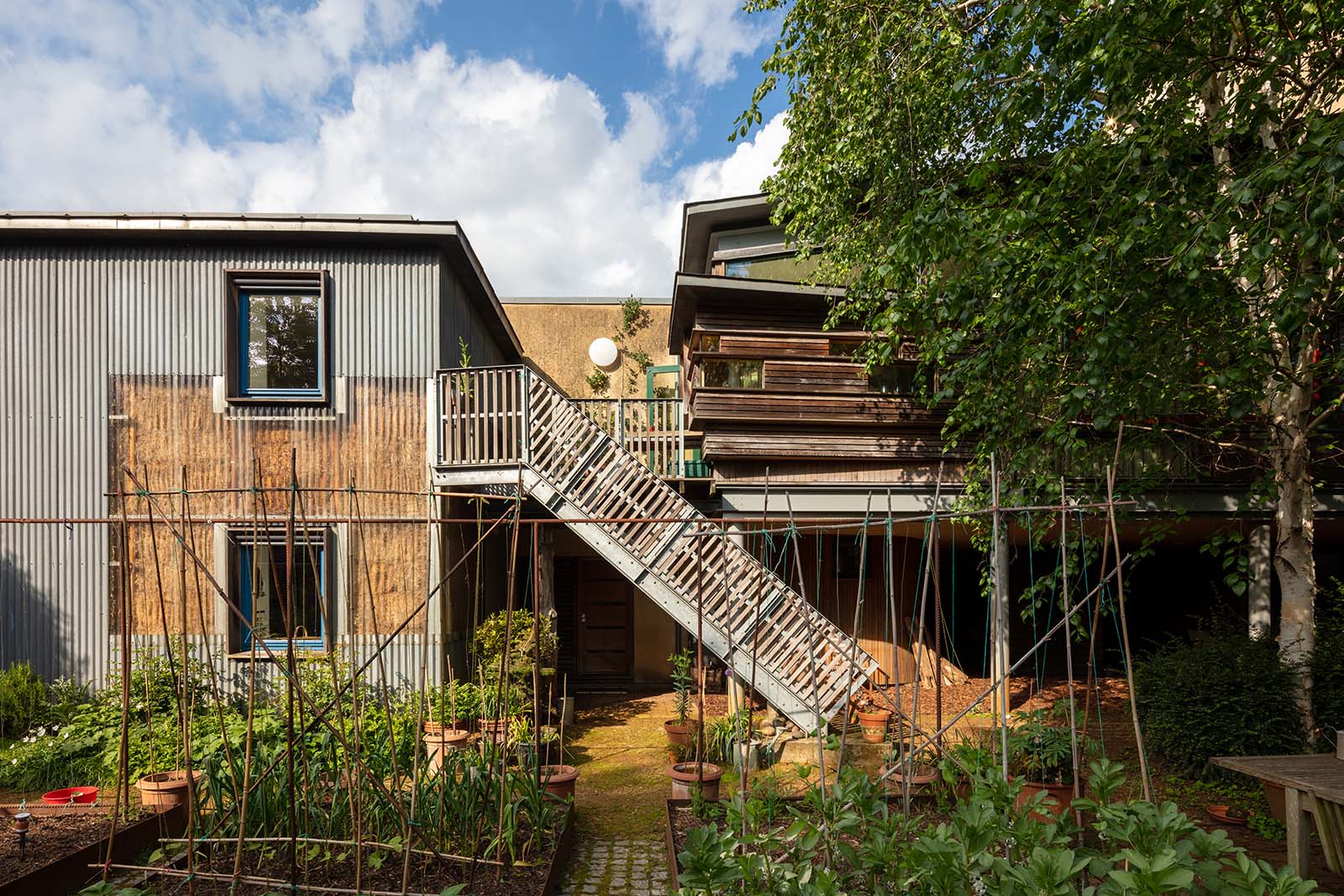
ソーラーパンクという美学的サブジャンルから、少しインスピレーションを得てみましょう。
原則:
• テクノロジーと自然のあいだの楽観的なハイブリッド化: テクノロジーを「支配の手段」ではなく、「有機的な成長のための足場」として捉えること
• スケールを縮小し(そして速度も落とし)、人やコミュニティのサイズ感に合わせた体験を設計すること
• 複数の世界観を前提とした設計: 他者の文脈において意味のあるものを解釈・設計できるように、 自律性を尊重し、「きっかけ」や「足場」を提供するという姿勢は、上記の原則と連動している
Let's draw some inspiration from the aesthetic subgenre known as Solarpunk.
Principles:
• Optimistic hybridization between technology and nature: technology as scaffolding (not control) for “organic growth”
• Scale down (and slow down) to human and community-size experience
• Designing within multi-worldviews works with the prior principles, designing for autonomy and designing affordances and scaffolding, as you provide others with the means to interpret and design what is relevant in their context

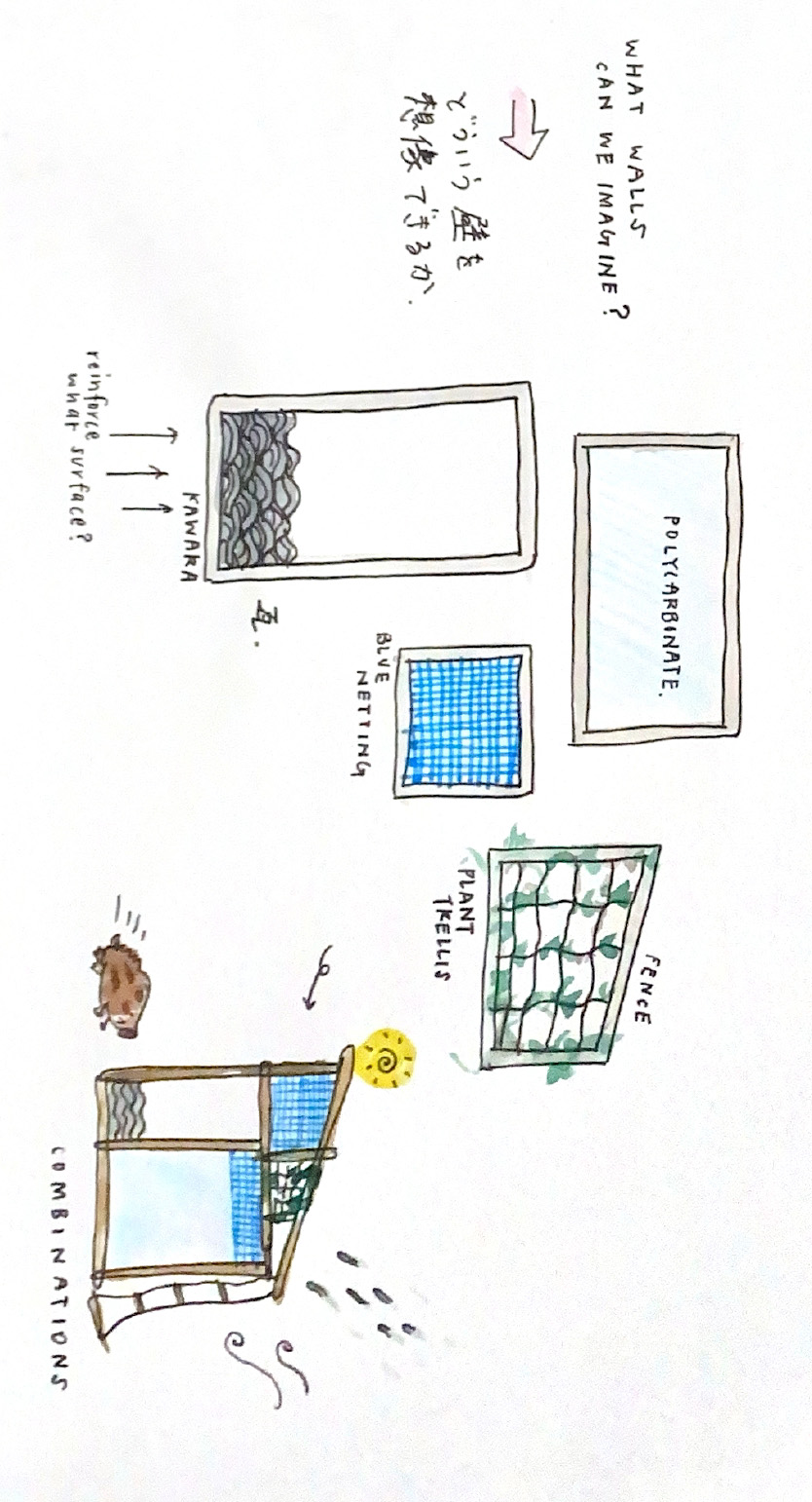
私たちは、壁が多機能で、生態的・社会的なインフラとして機能するというアイデアに強く惹かれています。
たとえば、その壁は以下のような役割を果たすことができます:
• 環境の変化に適応する
• 素材の再利用を祝福する
• 複数の種の関係性を支える
• 「隔てるもの」ではなく「つなぐもの」として働き、物理的にも社会的にも透過性を持つ
私たちは、入手可能な素材を活用しながら、適応性のある壁を構想しています。それは、人の住まい・農業システム・自然環境との境界といった要素を、相互につなげる存在となることを目指しています。
We are intrigued by the idea of a wall that can serve as a multi-functional, ecological/social infrastructures that:
• Adapts to environmental change
• Celebrates material reuse
• Supports multispecies relationships
• Acts as connectors rather than dividers, supporting both physical and social permeability.
We envision adaptability through available materials, promoting interconnectedness between human dwellings, agricultural systems, and environmental boundaries.

問い:
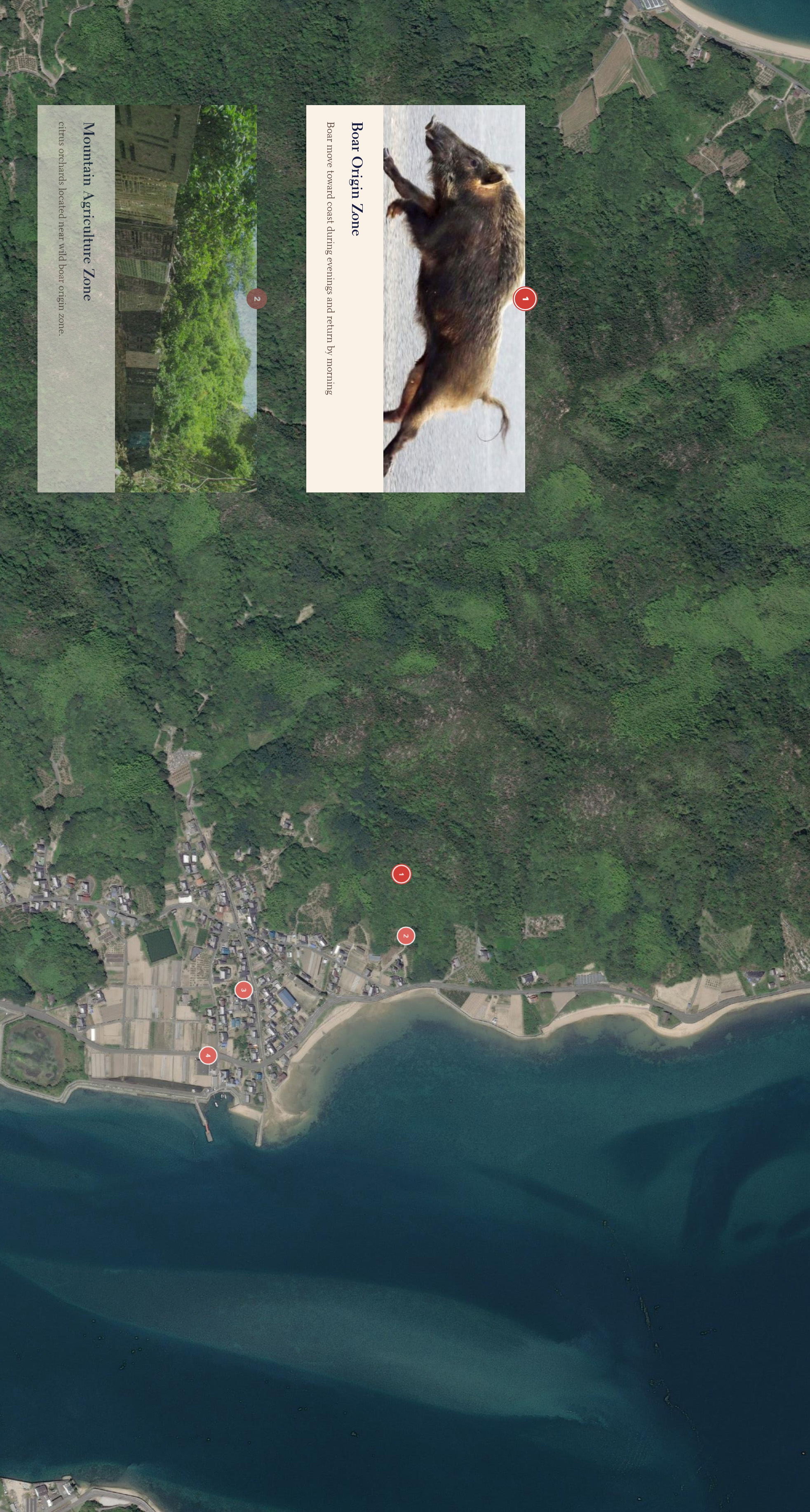
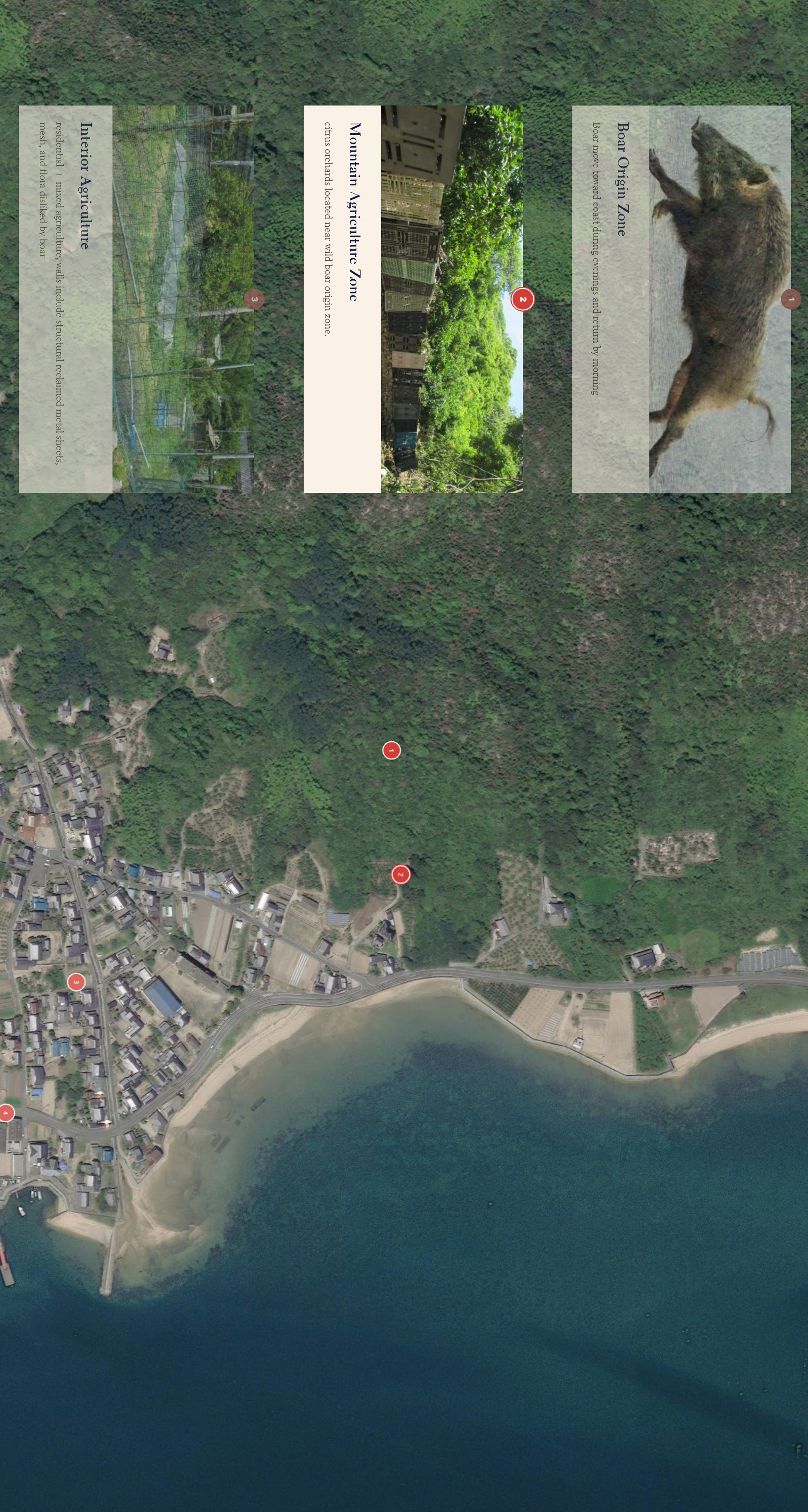
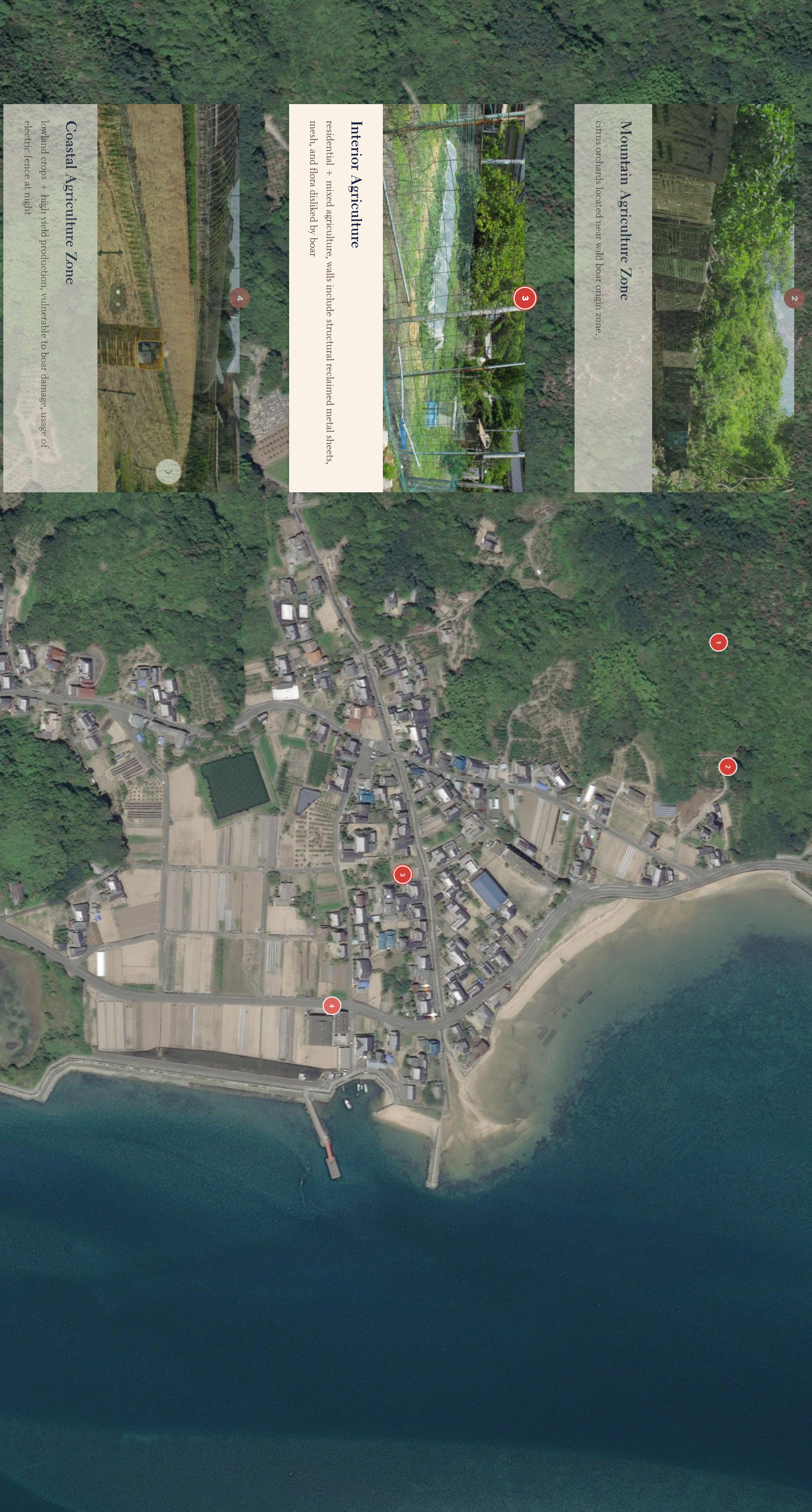
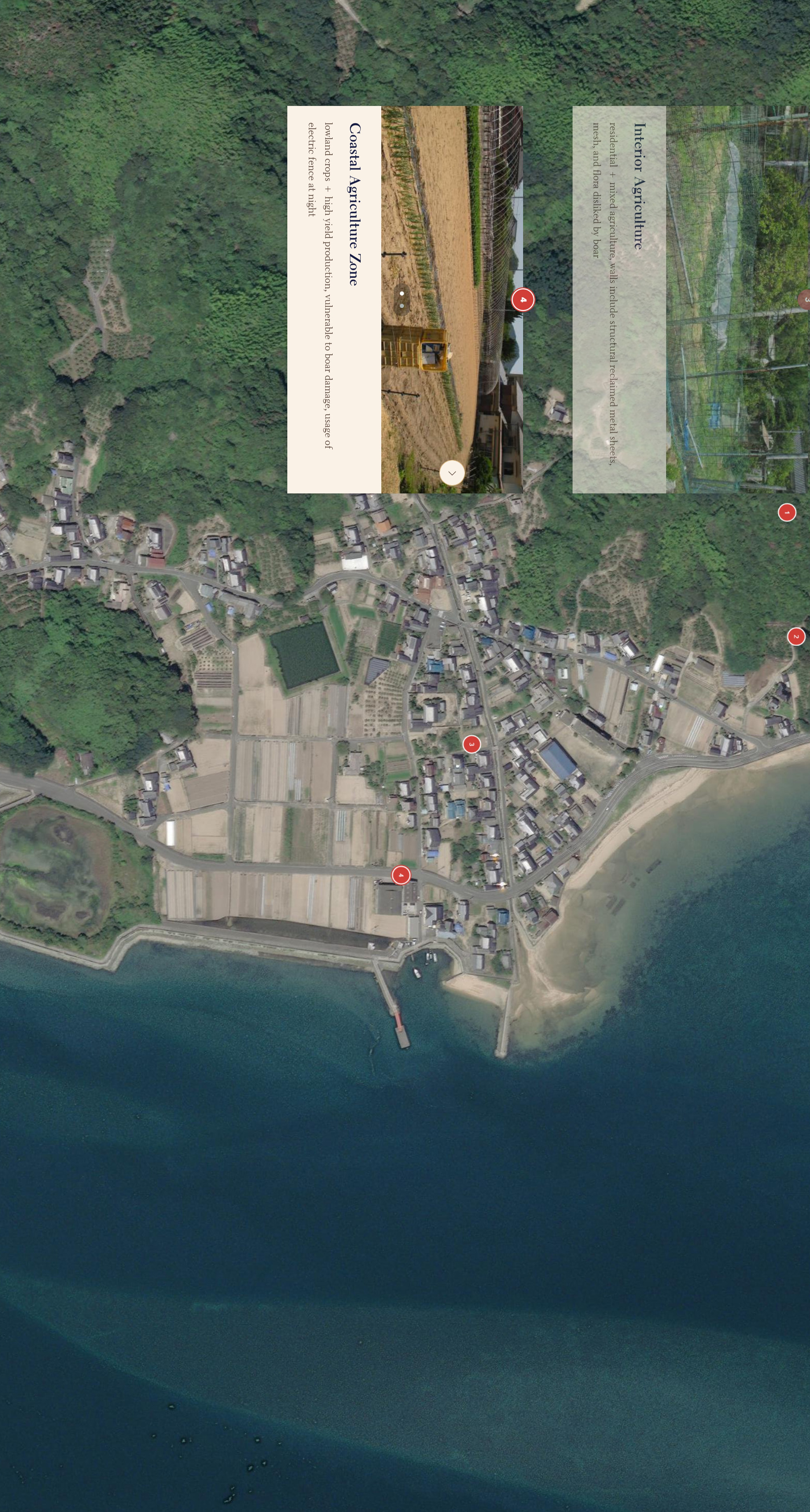
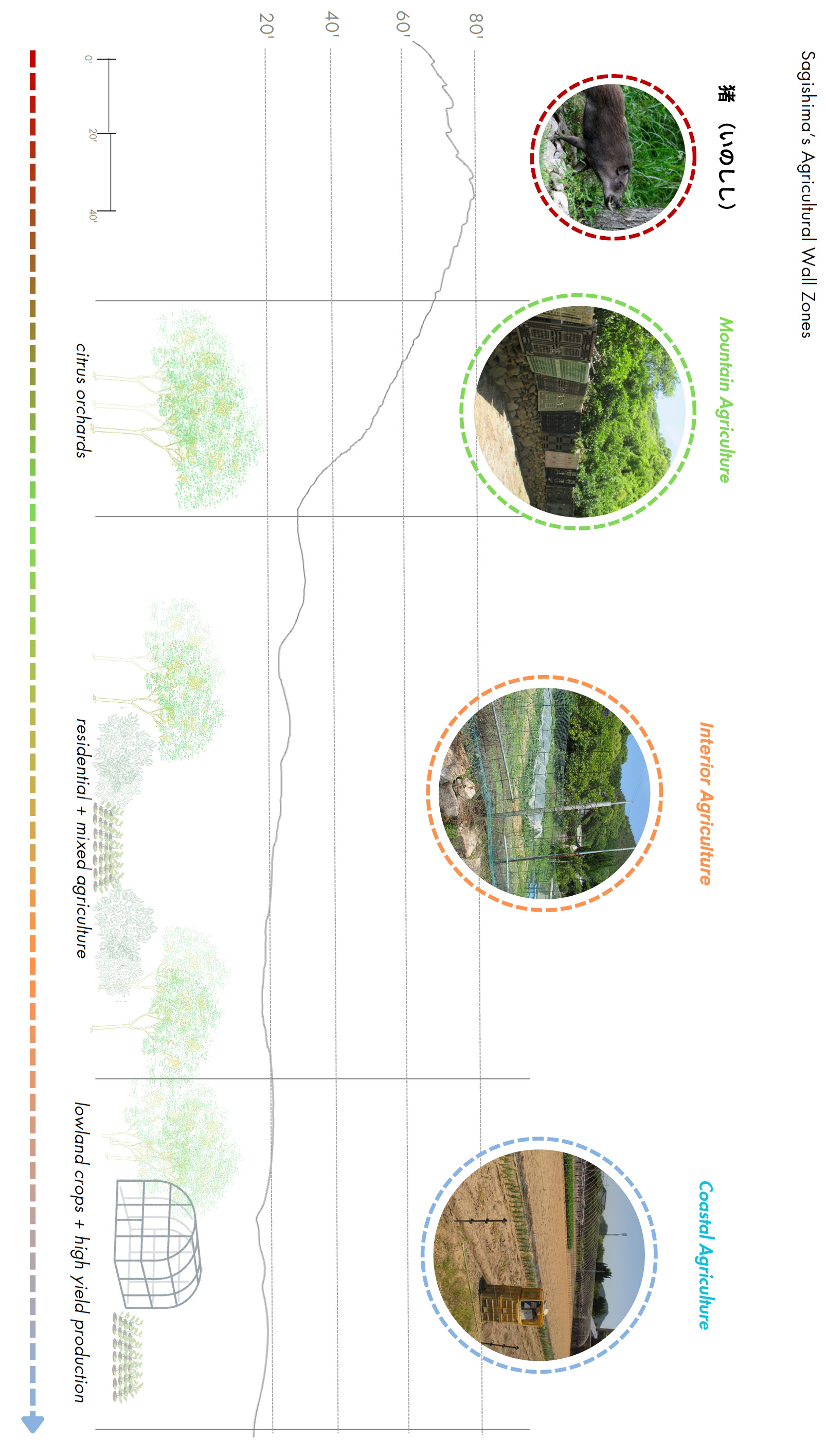
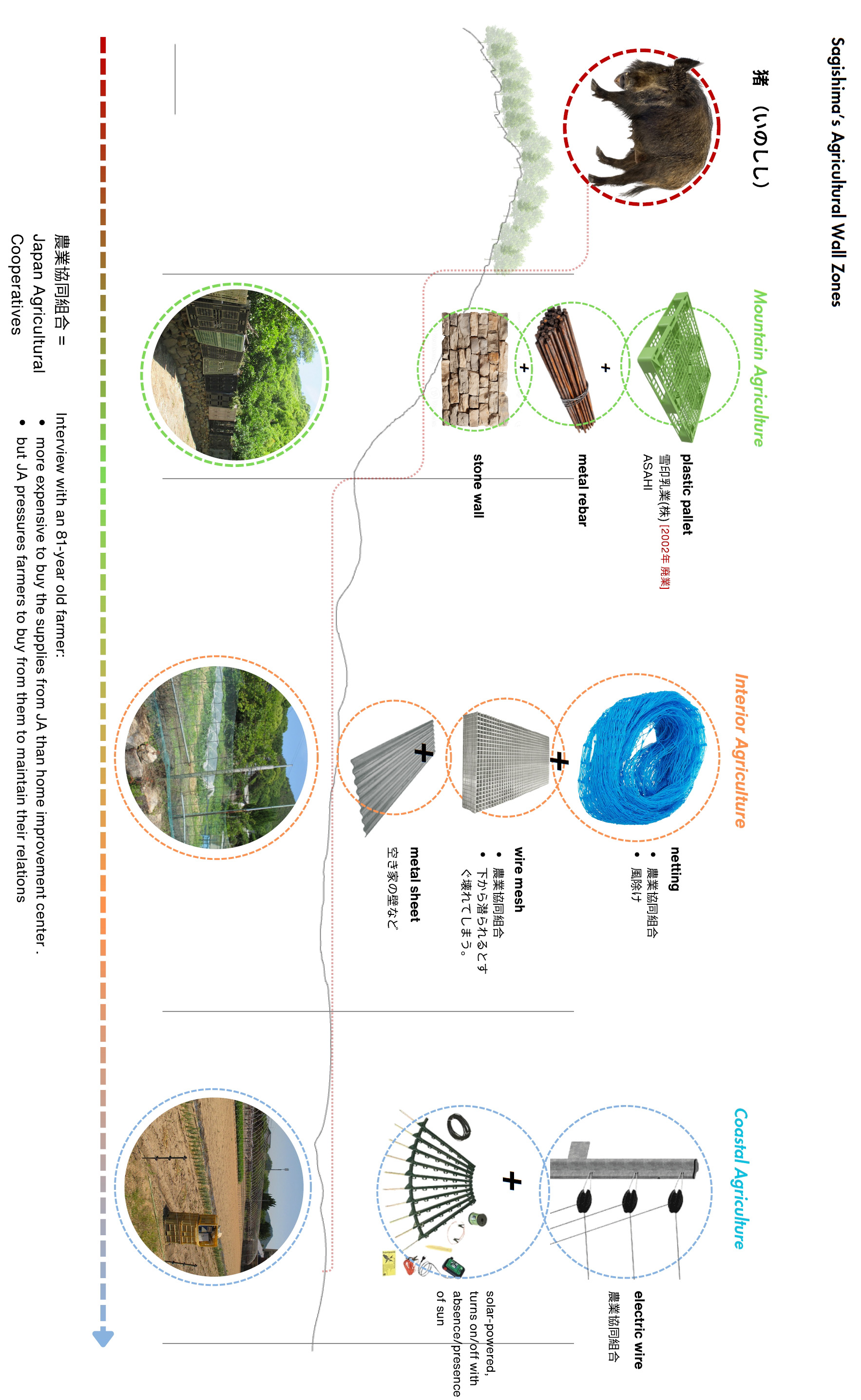
・もし佐木島を、山のいちばん高いところから海岸線まで断面図として描いたとしたら、どんな生態的な「ゾーン」を横断することになるでしょうか?
・それらのゾーンを隔てたり、つないだりしている境界やバリアにはどんなものがあるでしょうか?
・それぞれのゾーンはどう管理されているでしょうか?そこからどんな素材が調達されているでしょうか?
アクション項目:
・島内で調達
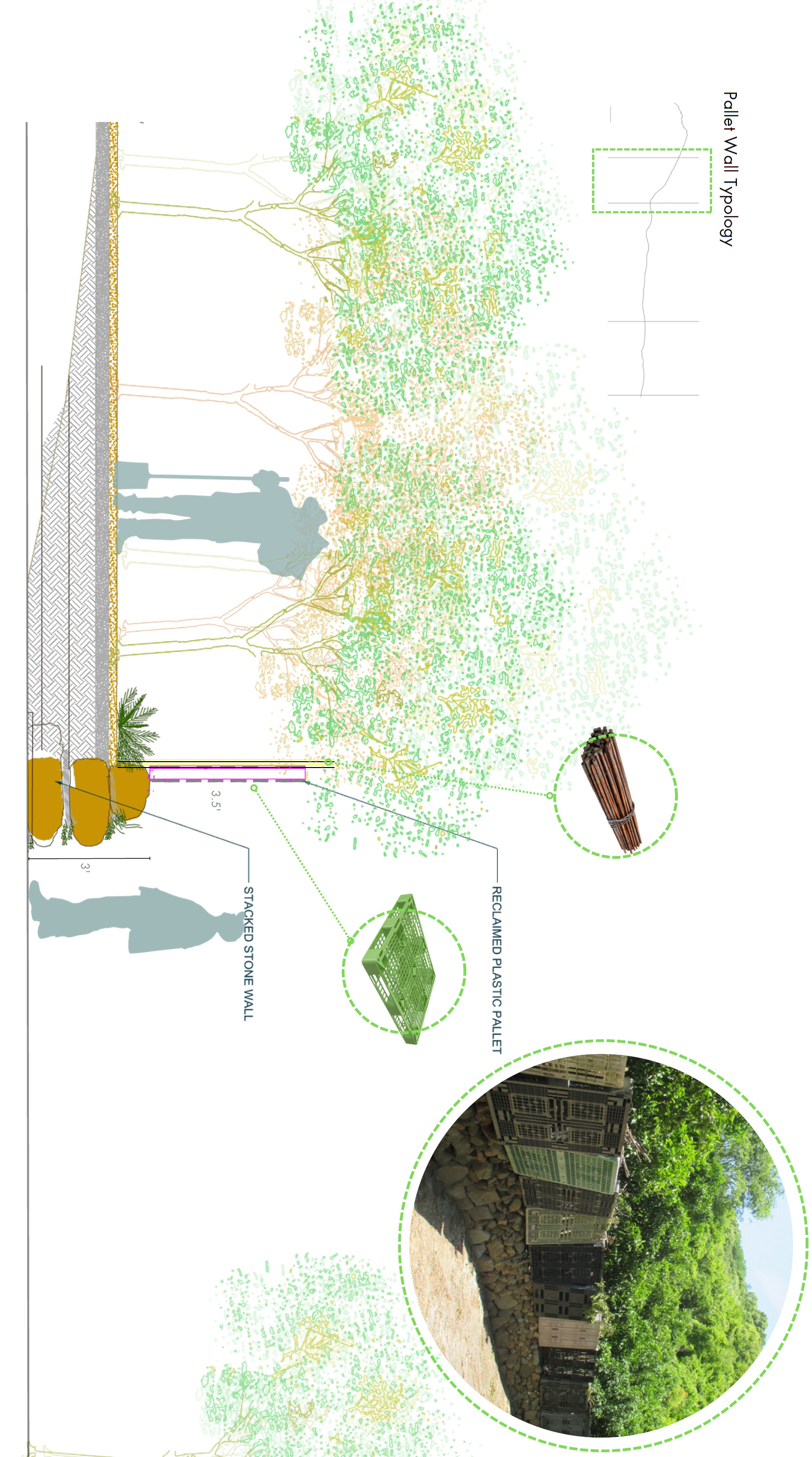
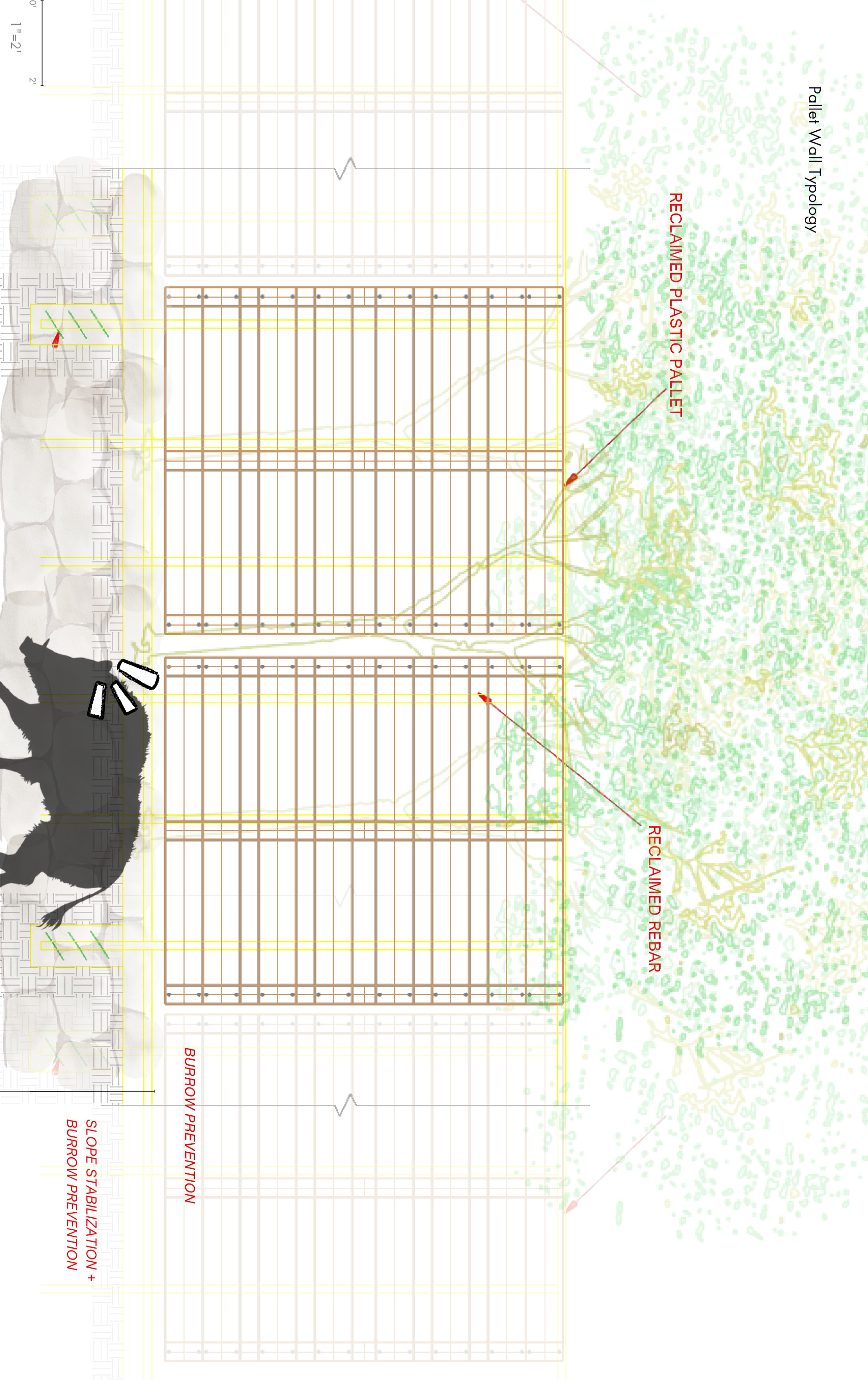
・再利用された素材を使って、実験的な壁のシステムを開発する
・生態的な機能を取り入れる:イノシシなどの野生動物を寄せ付けず、有益な生物を呼び込む植栽システムにインスピレーションを得ています
・境界を「絶対的な分離」ではなく「移行のゾーン」として設計する —— 透過性を持たせ、マイクロハビタットを生み出し、非公式な社会的利用も可能にする
・スケーラブルな設計原則を組み込む:ユーザーが必要に応じて拡張
・縮小
・再構成できるようにする
願い:
・不確かな未来に対応する柔軟性を備えた構造を望んでいます
・住民が自分の環境を自由に変えられる、コミュニティスケールの設計を望んでいます
・人間のシステムと生態系のあいだを分断するのではなく、つなぐ空間を望んでいます
・加速する変化に直面する島嶼環境において、再生的インフラのモデルとなる提案を望んでいます
Questions:
• If we drew a section of Sagishima, from the highest point on the mountain all the way down to the shoreline, what kind of ecological "zones" would we cut through?
• What are the borders and barriers that separate/connect these zones?
• How are the zones managed? What materials are sourced from each zone?
Action items:
• Develop an experimental wall system using locally sourced and salvaged materials
• Integrate ecological affordances: we're inspired by planting systems that deter wild boar & other rowdy fauna, while inviting beneficial fauna
• Design boundaries as zones of transition rather than absolute separations — allowing permeability, microhabitat creation, and informal social uses.
• Embed principles of easy scaling into the design scheme: easily modified by the user to expand, contract, or reconfigure as needs evolve.
Desires:
• We desire flexibility for uncertain futures.
• We desire community-scaled design that empowers residents to modify their environment.
• We desire spaces that connect, rather than divide, human and ecological systems.
• We desire a model for regenerative infrastructures in island contexts facing accelerating change.